REVIEW · TOKYO
Tokyo: Imperial Palace East Gardens and Tokyo Station Tour
Book on GetYourGuide →Operated by Reelu inc · Bookable on GetYourGuide
History meets city streets—right at the Imperial Palace.
What makes this tour worth your time is how the scenery stays readable as the story shifts from shogun-era defenses to imperial symbolism. I especially like the way guide Yuki turns stone, gates, and garden layouts into an easy picture in your head, and I love the signature Nijubashi views that give you a classic Tokyo postcard angle along the way. One thing to consider: there’s a moderate amount of walking, and you’ll want to dress for sun, rain, or chilly wind around the palace grounds.
If you want a short, structured history walk that doesn’t end with museum fatigue, this one hits the right balance. You’ll see key palace landmarks, then transition to Marunouchi’s modern architecture and art, and finish at the red-brick glow of restored Tokyo Station. The only drawback is that the pacing moves at a walking-tour tempo—perfect for most people, but not ideal if you need frequent long breaks.
In This Review
- Key things I’d prioritize on this walk
- Starting at Wadakura Fountain Park: getting your bearings before the palace
- Ninomaru Garden: why this stop changes how you read the whole complex
- Imperial Palace East Gardens: gates, guardhouses, and the Edo Castle story
- The moats and garden design that make it feel less like a lecture
- Nijubashi Bridge views: the photo moment with real meaning
- Marunouchi on foot: modern architecture and art with Edo Castle logic underneath
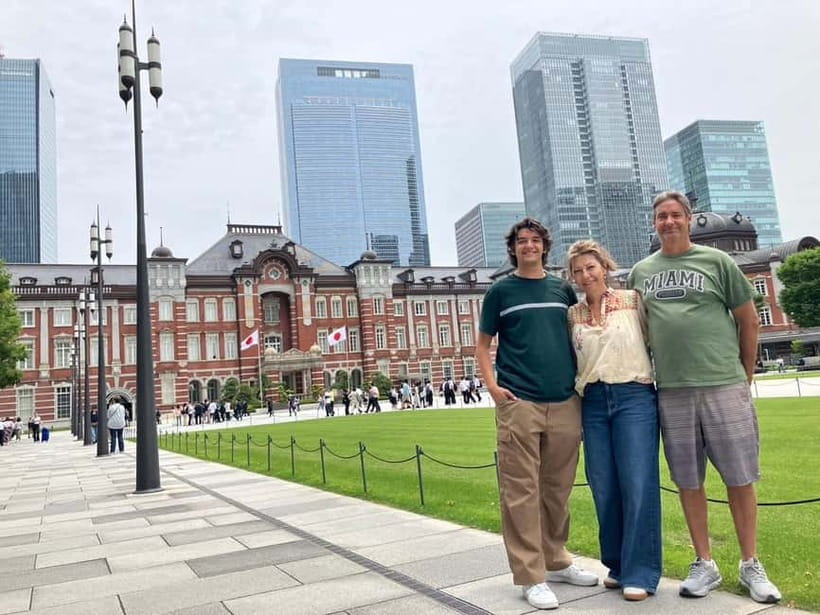
- Finishing at Tokyo Station: the restored red-brick payoff
- Price and time: does $38 match the value?
- Who this tour suits best (and who might want another option)
- Practical tips before you go
- Languages and guide style: why the narration matters here
- So, should you book the Tokyo Station and Imperial Palace East Gardens tour?
- FAQ
- What is the duration of the Tokyo Imperial Palace East Gardens and Tokyo Station tour?
- Where does the tour start?
- Where does the tour end?
- Is there an admission fee for the Imperial Palace East Gardens on this tour?
- What landmarks are included in the guided route?
- How much walking should I expect?
- What languages are available for the live guide?
- Is the tour wheelchair accessible?
- What should I bring with me?
- What is not allowed during the tour?
- Can I get a refund if my plans change?
Key things I’d prioritize on this walk
- Start where locals start: meet at the Starbucks by Wadakura Fountain Park so you can get oriented fast.
- East Gardens without the hassle: you get guided time in the grounds with no admission fee mentioned for the East Gardens.
- Practical Edo Castle context: you’ll see remnants like watchtowers and guardhouse areas tied to how the castle worked.
- Nijubashi Bridge views: you’ll pause for one of the most scenic palace-area perspectives.
- Marunouchi contrasts: modern towers and art sit just steps from older castle-site logic.
- A strong finish: ending at Tokyo Station helps you “land” the experience in a real transport hub.
Starting at Wadakura Fountain Park: getting your bearings before the palace
Most palace-area tours start with big expectations: walls, gates, and that sense of Tokyo’s old power layered under new streets. This one starts in a smarter way—at Starbucks スターバックス コーヒー 皇居外苑 和田倉噴水公園店, near Wadakura Fountain Park. It’s a practical meeting point because it’s easy to find and it helps you settle in before you step into the quieter palace grounds.
From there, you’re not just wandering. Your guide frames what you’re looking at: how the area around the Imperial Palace relates to older Edo Castle defenses and how visitors should think about the grounds as a designed system, not random greenery. That matters, because once you understand the “why” behind the layout, the scenery stops feeling generic.
And yes, you still get the calm. Before you hit the more detailed history, the walk lets you absorb the moats-and-garden vibe—those watery edges and open views that make the palace feel both formal and strangely relaxing.
You can also read our reviews of more tours and experiences in Tokyo.



Ninomaru Garden: why this stop changes how you read the whole complex
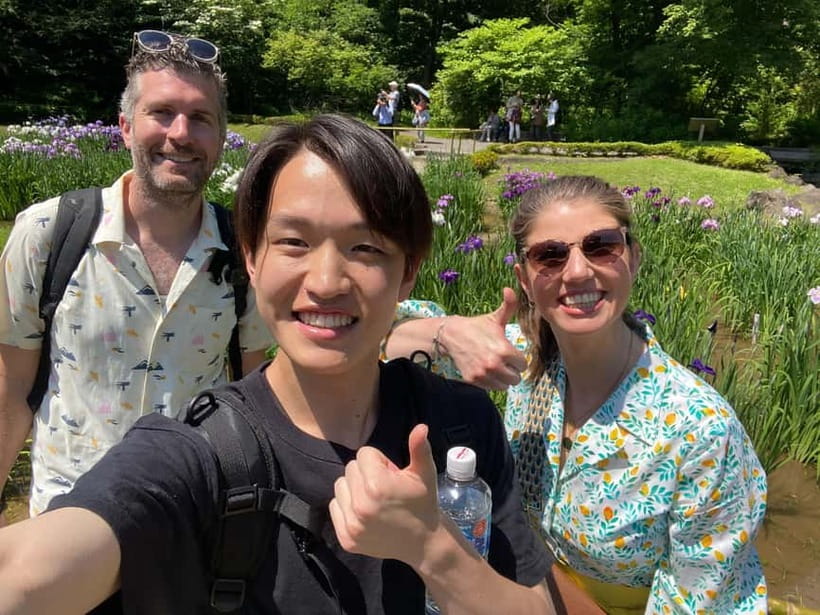
Your first proper historic marker is Ninomaru Garden. This part is valuable because it’s not just a pretty pause. It acts like a visual bridge between broader imperial symbolism and the practical spaces used to manage people, movement, and security in the Edo era.
Even if you’ve seen palace photos before, Ninomaru helps you understand how “inside” feels different from the “outside.” The garden gives you scale—how courtyards and paths relate to gates, guard areas, and sightlines. When a guide points out design choices, you start noticing small things like where views open up and where walls and passages subtly guide foot traffic.
This stop also works well for first-timers because it doesn’t require prior knowledge. If you’re the kind of traveler who gets lost when history turns abstract, this garden segment gives you a concrete anchor.
Imperial Palace East Gardens: gates, guardhouses, and the Edo Castle story
The heart of the tour is the Imperial Palace East Gardens guided time. You’ll walk through areas tied to castle-era remains and then connect them to the imperial story. What I like most about the way the tour is structured here is that it doesn’t treat the palace like a single attraction. It shows it as a sequence of spaces with different roles.
You’ll pass well-known points such as the Ote-mon Gate, plus the Hyakunin Bansho Guardhouse area. These stops are more than name checks. They help you understand how checkpoints and stationed security worked in a society where movement through space meant something. When you see these elements laid out in a walking route, you start to grasp the logic of where power stood and how it controlled access.
Another standout is the attention to Edo Castle features—things like the Fujimi-yagura watchtower and other visible or referenced castle-site elements. You also get a sense of the former main keep area through a scale model of the Edo Castle main keep. That scale model detail matters because palace grounds can feel flat if you only look at walls and gardens. A visual reference gives you height and mass, so the history becomes easier to picture.
As you move through the Honmaru area and toward the Kokyo Gaien National Garden, the tour tone shifts just enough to keep it fresh. You go from fortification thinking into “how did this become an imperial garden landscape?” That’s where the guided approach pays off—your brain stops asking What am I looking at? and starts asking Why is it built like this?
The moats and garden design that make it feel less like a lecture
Moats and garden paths don’t sound like they’d make history exciting on paper. In practice, they do—because the environment forces you to slow down. When the guide points out sightlines and how water edges shape movement, you get a hands-on understanding of defensive design and later garden aesthetics.
I also like that the East Gardens segment gives you enough time to actually see things, not just pass them. A garden pace is still a walking pace, but it’s designed for looking.
Nijubashi Bridge views: the photo moment with real meaning
One of the most eye-catching segments is the Nijubashi perspective. It’s the kind of view you see in countless Tokyo images, but the key difference on this tour is context. You’re not just standing for a picture; you’re learning what the view represents within the story of the grounds.
Nijubashi works as a payoff stop. After gates, guardhouse references, towers, and scale models, you finally get a sweeping composition that makes the entire area feel coherent. It’s a good reminder that ceremonial space and security space were connected long ago, even if they feel very different today.
If you’re a photographer, bring your camera stance game. Keep your hat handy too; palace-area sun can sneak up on you even when the air feels mild.






Marunouchi on foot: modern architecture and art with Edo Castle logic underneath
Once you step out toward Marunouchi, the experience changes gears. You’re leaving the palace atmosphere and entering a district defined by modern office towers, public spaces, and art-focused visuals. That sounds like a random contrast, but it isn’t. The real value here is how the tour helps you see Tokyo’s layering—old castle-site ideas on one side, contemporary city geometry on the other.
This part is especially good if you like walking through neighborhoods rather than only hitting landmarks. The guide’s job becomes translation: you’re moving through streets and structures, but your brain is still tracking the earlier story—how the castle shaped the city’s lines, and how modern Tokyo built on that.
It’s also a relief from constant “inside” sightseeing. You get a street-level pulse, and you start noticing details like art displays and modern architectural features that you might otherwise rush past.
The tour keeps this segment organized, too. There’s guided time and then a walk connection—about ten minutes of moving on foot between areas—so you stay oriented without feeling herded.
Finishing at Tokyo Station: the restored red-brick payoff
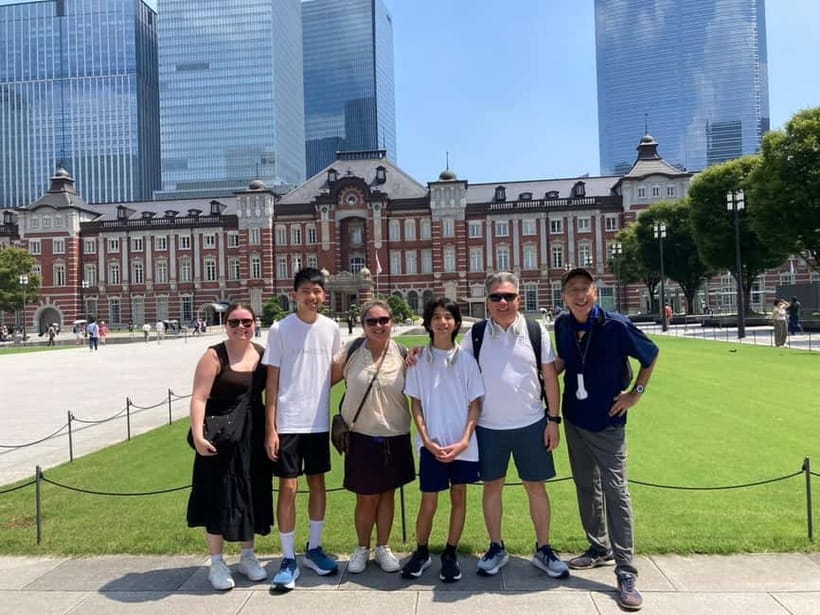
The tour ends at 東京駅, and I think that’s a strong design choice. Tokyo Station isn’t just a place to go next; it’s a symbolic finish. You get the satisfaction of seeing the modern transport machine while carrying the history story you just learned.
The exterior of Tokyo Station being part of the route also gives you an easy way to reset your day. If you’re heading to another neighborhood afterward, you’re right there with major rail and subway access.
What makes the ending feel especially right is the emotional contrast. East Gardens can slow you down. Marunouchi keeps you moving. Tokyo Station then acts like a clean landing strip—busy enough to feel real, historic enough to feel meaningful.
Price and time: does $38 match the value?
At $38 per person for about 150 minutes, this tour is priced like a short guided experience rather than an all-day deep dive. That’s not a problem. In fact, it’s the point: you’re buying structure, context, and a guided route through multiple highlights without needing to plan each stop yourself.
Two value boosters matter here:
- No East Gardens admission fee is required (as stated), so your money goes into guidance and the route experience.
- You get English guidance plus multiple languages options, meaning you’re not stuck trying to interpret everything alone.
If you like spending less time figuring out what to see and more time learning how to see it, the price looks fair. If you prefer to wander independently and only pause for museum-style details, you might feel it’s better to go self-guided. But for most visitors, a guided walk is the efficient shortcut to understanding what’s otherwise easy to miss.
Who this tour suits best (and who might want another option)
This is a great fit if you’re:
- a history buff who wants concrete place-based explanations, not textbook talk
- a first-time palace visitor who needs help translating what you’re seeing
- someone who wants city-and-palace variety in one short window
- traveling with limited time and wants a clear start-to-finish route
It may be less ideal if you:
- hate walking for a steady period (it’s described as a moderate amount of walking)
- need frequent long breaks between stops
- are looking for a totally indoor, climate-controlled experience
Practical tips before you go
This is where you can make the experience smoother.
- Wear comfortable shoes. You’re walking through palace grounds and city streets.
- Bring water and sunscreen. Even when it looks mild, the pace adds up.
- Pack a hat if you’re sensitive to sun.
- Bring your camera—the Nijubashi and Tokyo Station exterior make photo time worth it.
- Choose weather-appropriate clothing. Palace-area wind can be noticeable.
There are also some clear rules:
- No smoking
- No flash photography
- No backpacks
If you’re bringing a day bag, keep it simple. Light and easy wins.
Languages and guide style: why the narration matters here
This tour is guided in English and also available in Japanese, Spanish, Chinese, and French. That multilingual setup matters because it lets you get the story in a language you can fully process, instead of just collecting place names.
The biggest theme in the guide praise is delivery. People highlighted how Yuki explained the area in a way that was easy to follow, even humorous, and helped them picture the past. The tour also ties the palace area to the Edo Castle world—so you don’t just hear terms, you connect them to what you’re standing near.
That’s the difference between seeing walls and understanding why they’re there.
So, should you book the Tokyo Station and Imperial Palace East Gardens tour?
If you want an efficient way to understand the Imperial Palace grounds without getting lost in translation, I’d book it. The route design does the hard work for you: it connects East Gardens, Edo-era references (including the watchtower and scale model idea), a signature view at Nijubashi, and then moves into Marunouchi and ends at Tokyo Station.
I’d skip it only if you strongly prefer solo wandering, you don’t handle steady walking well, or you don’t care about guided interpretation. Otherwise, this tour is a solid value play: a focused 150 minutes that leaves you with both photos and a clearer mental map of Tokyo’s layered past.
FAQ
What is the duration of the Tokyo Imperial Palace East Gardens and Tokyo Station tour?
The tour lasts about 150 minutes.
Where does the tour start?
It starts at スターバックス コーヒー 皇居外苑 和田倉噴水公園店.
Where does the tour end?
The tour finishes at 東京駅.
Is there an admission fee for the Imperial Palace East Gardens on this tour?
Entry to the Imperial Palace East Gardens is included, and admission is stated as not required.
What landmarks are included in the guided route?
You’ll visit key landmarks such as Ote-mon Gate, Hyakunin Bansho Guardhouse, Ninomaru Garden, and more, plus areas connected to Edo Castle such as Fujimi-yagura and a scale model of the main keep.
How much walking should I expect?
You should be ready for a moderate amount of walking during the tour.
What languages are available for the live guide?
Live tour guides are available in English, Japanese, Spanish, Chinese, and French.
Is the tour wheelchair accessible?
Yes, it is wheelchair accessible.
What should I bring with me?
Bring comfortable shoes, a hat, a camera, sunscreen, and water, plus weather-appropriate clothing.
What is not allowed during the tour?
Smoking is not allowed, flash photography is not allowed, and backpacks are not allowed.
Can I get a refund if my plans change?
Yes, free cancellation is available up to 24 hours in advance for a full refund.