REVIEW · TOKYO
Tokyo: Edo Castle Ruins & Imperial Palace East Garden Tour
Book on GetYourGuide →Operated by DeepExperience, Inc. · Bookable on GetYourGuide
Tokyo’s walls start talking at street level. This 2-hour walk through the Edo Castle Ruins is interesting because you don’t just see stone and moats—you learn how shoguns and emperors shaped power in this exact spot, starting with the story behind the Wadakura Fountain. I like that the guide keeps pointing out what each remnant was for, so history feels practical instead of vague.
My second big favorite is the calmer shift into the Imperial Palace East Gardens, especially the Ninomaru Garden pond with koi fish. One consideration: you cannot enter the inner Imperial Palace grounds or the palace buildings (they’re not open to the public), so plan on ruins, gardens, and viewpoints rather than an inside-the-palace experience.
In This Review
- Key things you’ll notice on this tour
- Where you start: Wadakura Free Rest Area (and a yellow sign)
- Wadakura Fountain and moat: a royal wedding memorial with real context
- Otemon Gate, Ote San-no-mon ruins, and guardhouses: reading the castle like a map
- Edo Castle ruins to Honmaru: where the main decisions were made
- Tenshu-dai panoramic views: turning rubble into a real sense of place
- Small waypoints: 都道府県の木 and 諏訪の茶屋
- Imperial Palace East Gardens: Ninomaru Garden koi and a calmer pace
- English guide quality: when questions get answered patiently
- Timing, pace, and what to bring for a comfortable 2 hours
- Price and value: what you’re really paying for at $37
- Who should book this Edo Castle + East Gardens tour
- Should you book it?
- FAQ
- Where do I meet the guide?
- Is the tour in English?
- How long is the tour?
- Can I enter the Imperial Palace palace buildings?
- What’s included in the price?
- What should I bring, and what are the rules?
- Can I cancel or change my plans?
Key things you’ll notice on this tour
- Wadakura Fountain: a royal-wedding commemoration explained right where it sits
- Gate-to-gate clues: Otemon Gate and gate-ruin stops that explain castle defense
- Honmaru area visuals: the castle keep reconstruction model plus view time at the Tenshu-dai
- Tiny culture stops: your guide points out 都道府県の木 and 諏訪の茶屋 along the route
- Garden quiet: Ninomaru Garden with koi in the pond, a nice payoff after the ruins
Where you start: Wadakura Free Rest Area (and a yellow sign)
You’ll meet at 和田倉無料休憩所 outside the entrance, and the guide will be holding a yellow sign. This matters more than it sounds. Central Tokyo can be a maze of walkways and signs, so finding the exact meeting point quickly saves time and stress.
The tour starts with an indoor rest area, which is handy if the weather turns. From there, you’re guided at a steady, easy walking pace through a tight loop of major Edo-period remnants and palace-garden highlights. It’s built for a 2-hour visit, not a half-day wandering project.
You can also read our reviews of more tours and experiences in Tokyo.



Wadakura Fountain and moat: a royal wedding memorial with real context
The first stop is the Wadakura Fountain National Park area (about 10 minutes). The guide explains the story behind the fountain—built to commemorate a royal wedding—and that simple fact gives you a strong anchor before you move into the castle structures.
Next comes the Wadakura Moat (about 5 minutes). This is where the tour starts linking “pretty” to “purpose.” Moats weren’t decoration. They were part of how the Edo Castle complex controlled access and movement, and the guide’s commentary helps you see the waterline as a defensive feature rather than a scenic border.
If you like tours that give you one clear takeaway per stop, this opening does that. You leave with the sense that the people who planned this place thought about ceremony and security at the same time.
Otemon Gate, Ote San-no-mon ruins, and guardhouses: reading the castle like a map
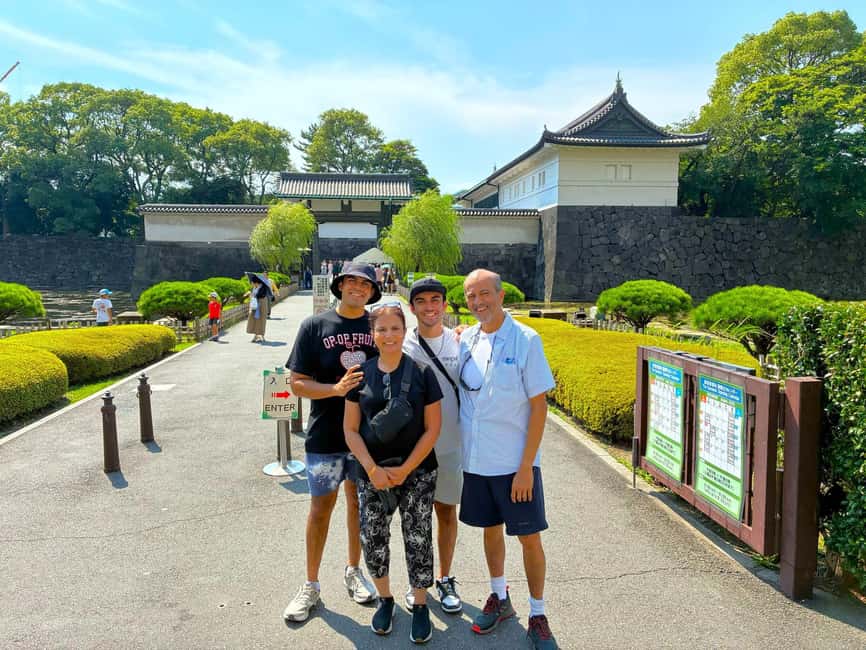
After the fountain and moat, you shift into the gate zone, where things become more architectural. The route includes:
- Ote-Mon Gate (about 10 minutes)
- Ote-San’no Gate Ruins (about 10 minutes)
- Hyakunin Bansho Guardhouse (about 10 minutes)
These aren’t random stops. Each one is tied to how the castle worked at ground level: entrances, chokepoints, and the areas connected to guarding movement through the complex.
What I like about this portion is the way the guide connects the remnants to the “why.” Even when the structures are partial or reduced to ruins, you still get a sense of how people would have approached, where they would have slowed down, and how defenders would have been positioned.
The tour also highlights specific elements such as Doshin Bansho and Hyakunin Bansho as part of the castle’s defense and samurai heritage story. If you’ve ever looked at a photo of stonework and wondered what role it actually played, this is where that question gets answered.
Edo Castle ruins to Honmaru: where the main decisions were made
Now you move toward the heart of the old castle complex. The itinerary spends time at:
- Edo Castle Ruins (about 15 minutes)
- Site of Edo Castle Honmaru (Main Hall) (about 10 minutes)
Honmaru is where the meaning gets sharper. Even if you’re not a hardcore history person, the guide makes it clear that this wasn’t a casual administrative area. This is where leadership and key power structures were focused—so your perspective shifts from “cool old structures” to “the steering wheel of authority.”
At the Honmaru stop, you also see an impressive Edo Castle keep restoration model (about 10 minutes). Models are helpful for this type of sight because castle keeps and towers don’t always survive intact. Instead of leaving you to guess, the tour gives you a reference point so you can mentally reconstruct what once stood here.
Tenshu-dai panoramic views: turning rubble into a real sense of place
One of the best parts of this route is the time at the Tenshu-dai area for panoramic views. You’re not just collecting photos—you’re using the sightlines to understand the castle’s value.
From viewpoint areas, you can start to grasp why this location mattered. High sightlines help with early awareness, while the overall layout helps you understand how the castle connected to the surrounding city.
This is also a good mental reset. After gate remnants and guardhouse explanations, the view time lets the story land in your head. You’ll likely notice things you didn’t know you were supposed to look for—major paths, the way the grounds open up, and the overall scale of the area.






Small waypoints: 都道府県の木 and 諏訪の茶屋
The tour includes a couple of shorter stops that aren’t always what people plan for—都道府県の木 and 諏訪の茶屋—with about 10 minutes each on the guided schedule.
Because these are called out specifically in the tour route, your guide uses them as quick context points: small markers of place, culture, or local connections inside the broader East Gardens setting. Even if you don’t have a strong attachment to those exact features, it keeps the walk from feeling like a straight line.
Think of these as the tour’s pacing tools. They break up the heavier “castle defense” explanations and help you absorb the day without rushing.
Imperial Palace East Gardens: Ninomaru Garden koi and a calmer pace
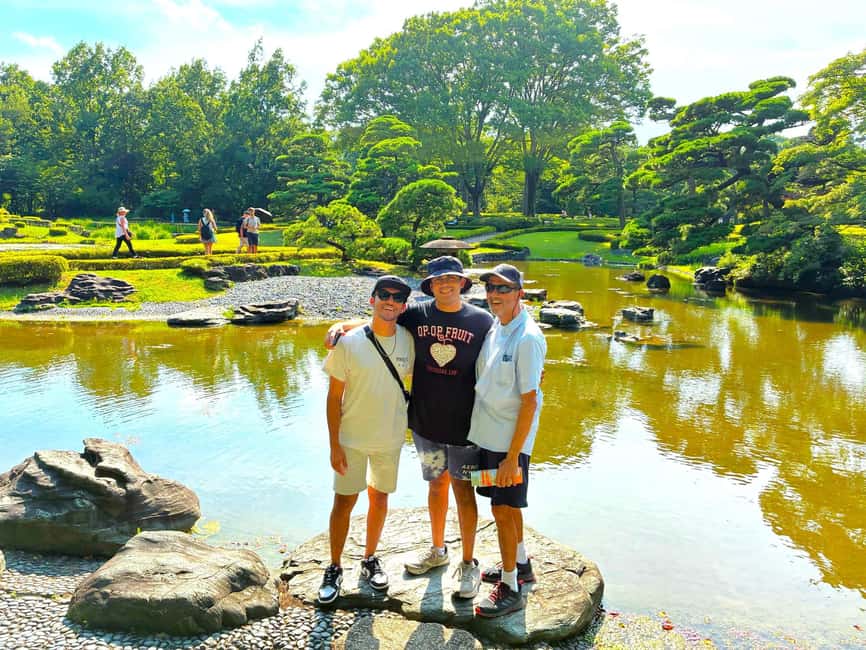
Then the mood shifts—quietly, on purpose. You enter the Imperial Palace East Gardens (about 15 minutes) and continue to Ninomaru Garden (about 15 minutes).
This is where I like to slow down during the tour. The gardens work like a reward: you’ve learned about gates, moats, and defensive roles, and now you’re in a landscaped space meant for reflection and beauty.
The Ninomaru stop includes koi fish in the pond, which gives you a moment that’s both visual and relaxed. Even if you’re not a “watch fish for ten minutes” person, the guide’s explanation and the setting make it easier to stop scanning for information and just enjoy the pace.
Important note: the tour focuses on the gardens and former castle remnants. The Imperial Family still resides in the palace, and you won’t enter inner grounds or palace buildings.
English guide quality: when questions get answered patiently
This is a live guided tour in English, and the overall success depends heavily on the guide’s delivery. The guide is part of what makes this type of walk worth paying for. Ruins are one thing. Clear interpretation is another.
In recent English-guided groups, guides such as Mari san and Isao have earned praise for passion and for answering questions patiently. That matters because this tour covers multiple named structures—Otemon, Ote-San’no Gate ruins, Hyakunin Bansho, and more. If your guide can translate the meaning behind the names, the whole route clicks.
There is one fair caution, though. A short, 2-hour circuit can feel like a guided park walk if you’re hoping for long, dramatic storytelling at every stop. If you want more talking and less walking, come with clear expectations: you’re here for an efficient guided orientation of castle remnants and gardens, not a lecture that runs half the day.
Timing, pace, and what to bring for a comfortable 2 hours
The tour runs about 2 hours, with short guided segments—often around 5 to 15 minutes per stop. That pacing is ideal for sightseeing days when you still have meals and other neighborhoods planned.
For comfort, bring:
- Comfortable shoes (you’ll be on foot for the full loop)
- Camera (there’s also a commemorative photo opportunity)
- Water (Tokyo can feel hot even when the schedule looks short)
Two practical rules to remember:
- No smoking
- No flash photography
These are the kinds of rules that are easy to follow once you know them. The flash rule especially matters if you’re used to quick nighttime snapshots or indoor camera habits.
Price and value: what you’re really paying for at $37
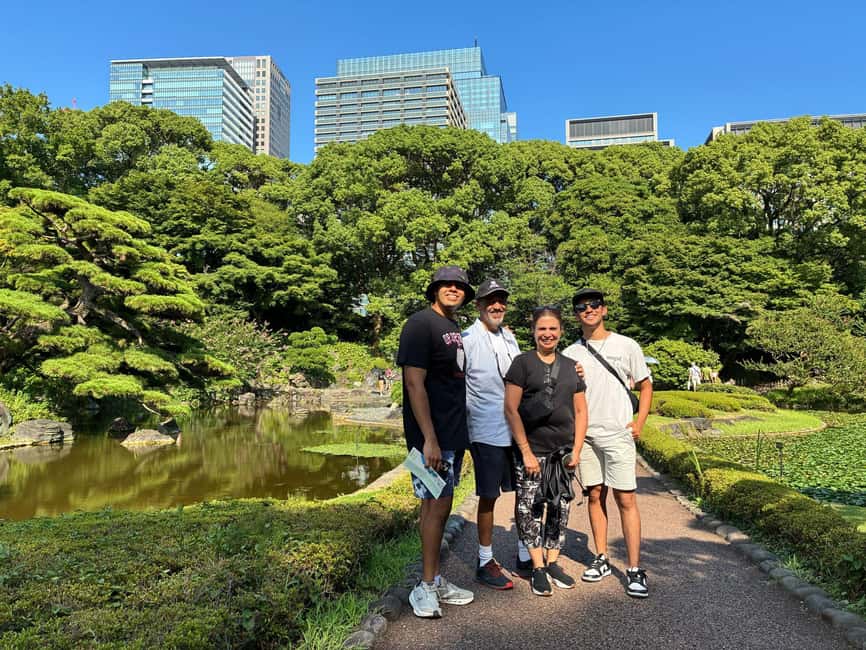
At $37 per person for 2 hours, the value comes from three things included in the price:
- A live English guide
- Admission to Edo Castle and the Imperial Palace areas covered on the tour
- A commemorative photo opportunity
You’re not just buying access to grounds. You’re buying interpretation, and in this part of Tokyo, that interpretation is what turns “stone and paths” into a coherent story of shoguns, emperors, and the defensive logic of the former Edo Castle.
What’s not included:
- Hotel pickup or drop-off
- Food and drinks
- Entry to the Imperial Palace’s palace buildings (not open to the public)
So if you’re the type of traveler who enjoys reading signage and figuring things out alone, you might feel the guided portion is optional. But if you want a clean narrative route, named stops, and explanations you don’t have to hunt down yourself, this price starts to make sense.
Who should book this Edo Castle + East Gardens tour
This tour fits best if you:
- Want an organized introduction to Edo Castle ruins and the Imperial Palace East Gardens
- Like short stops with clear explanations tied to what you can see
- Prefer guided orientation over trying to piece together scattered remnants on your own
It’s not for everyone. It is not suitable for children under 6 and it is not suitable for people with mobility impairments or wheelchair users. Also, because the inner palace buildings aren’t open to the public on this tour, it’s better suited for people comfortable with gardens and ruins rather than “inside access.”
Should you book it?
Book this if you want a focused, efficient way to see two major Tokyo historical zones without guessing what everything means. I especially recommend it if you care about understanding the castle layout (gates, guard points, and viewing areas) and then want the garden calm as your payoff.
Skip or consider carefully if you’re chasing an inside-palace experience. You’ll be in the East Gardens and the former castle areas, not the palace buildings. If that’s exactly what you want, you’ll likely feel constrained by what isn’t accessible.
If you do book, show up with good shoes and a camera ready. This tour works best when you let the guide connect each name on the route to the physical place in front of you.
FAQ
Where do I meet the guide?
Meet outside the Wadakura Free Rest Area (和田倉無料休憩所) in front of the entrance. The guide will be waiting with a yellow sign.
Is the tour in English?
Yes. The tour guide provides the tour in English.
How long is the tour?
The duration is 2 hours.
Can I enter the Imperial Palace palace buildings?
No. You can’t enter the inner grounds of the Imperial Palace, and the palace buildings are not open to the public, so this tour focuses on the East Gardens and the former castle remnants.
What’s included in the price?
Included are a live tour guide, admission to Edo Castle and the Imperial Palace (for the parts covered on the tour), and a commemorative photo opportunity.
What should I bring, and what are the rules?
Bring comfortable shoes, a camera, and water. Smoking isn’t allowed, and flash photography is not allowed.
Can I cancel or change my plans?
Yes. The tour offers free cancellation up to 24 hours in advance for a full refund, and you can reserve now & pay later.