REVIEW · TOKYO
Tokyo Asakusa : Samurai School, Become a Samurai Warrior
Book on GetYourGuide →Operated by Smile Vista Co.,Ltd. · Bookable on GetYourGuide
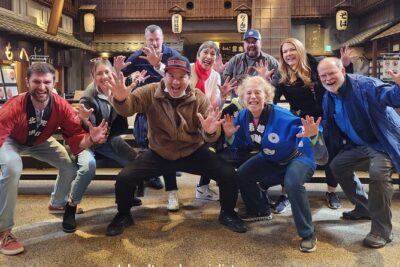
Sword practice in Tokyo, in costume. This samurai warrior lesson near Tokyo Skytree feels equal parts tradition and performance, because you’re not just shown moves. You actually practice bowing, drawing (with a safe training sword), and striking with stylized swordplay while a 25-year master guides you through it.
I also love that it’s built for photos and video. You dress up, pose during a dedicated photo moment, and leave with a completion certificate that makes the whole thing feel real, not just a quick demo. The main drawback to note is that sessions can run at a different dojo temporarily, so you’ll want to double-check the meeting location and arrive on time.
In This Review
- Key highlights that make this class worth your time
- Samurai Lesson in Asakusa: What the 90 Minutes Really Feels Like
- Where You Meet (and Why the Dojo Might Not Be the One You Expect)
- From Civilian to Samurai: The Costume Moment That Sets the Tone
- Learning Samurai Bowing and Respect: Technique With Meaning
- Sword Drawing and Stylized Swordplay With Practice Blades
- Optional Choreographed Duel: Safe, Controlled, and Camera-Ready
- The Photo Shoot, Video Moment, and Your Certificate Keepsake
- Price and Value: Does $90 for 90 Minutes Add Up?
- What to Bring, What to Wear, and How to Prepare
- Who This Samurai School Experience Is Best For
- Should You Book This Samurai Lesson in Asakusa?
- FAQ
- How long is the Samurai School experience?
- Where do I meet for the class?
- What’s included in the price?
- Do I need to speak Japanese?
- What should I bring?
- Is there a small group size limit?
- Is it wheelchair accessible?
Key highlights that make this class worth your time
- Dress-up first, then training: you put on the samurai costume before you start moving, so you instantly feel in character
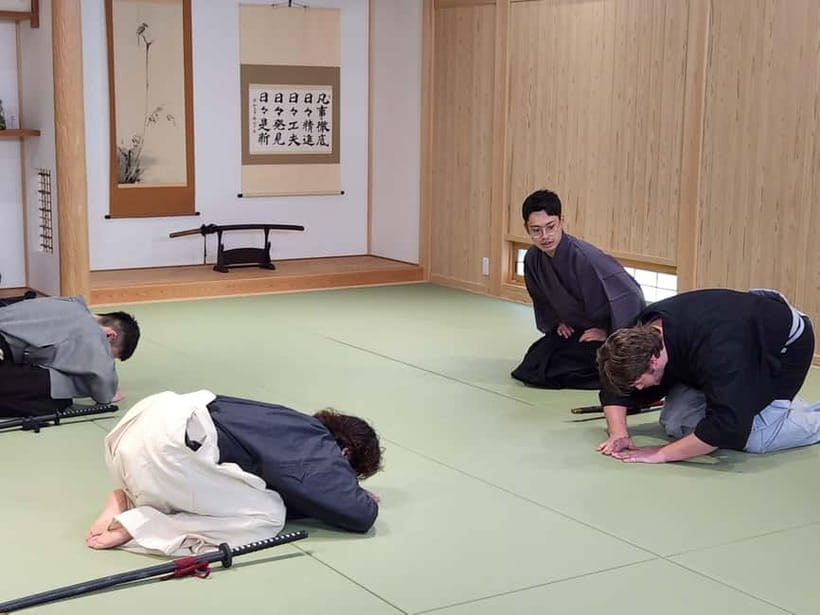
- Respect-focused sword basics: bowing and showing respect are part of the lesson, not just choreography
- Practice sword workshop: you learn stances, strikes, and movements with guided safety
- Photo and video capture: you get your own performance-style shots with the master/interpreter
- Small group pace (up to 6): enough personal attention without feeling rushed
Samurai Lesson in Asakusa: What the 90 Minutes Really Feels Like
This is a 90-minute samurai experience that mixes culture, movement, and camera-friendly presentation. If you like hands-on activities (not museum-style standing around), you’ll appreciate the structure: you arrive, you change into costume, you learn a short set of fundamentals, and you finish with a photo session and certificate.
The session is guided by a professional master with 25 years of samurai action experience, plus an English-speaking interpreter. The vibe is friendly and controlled. You’re learning in a safe environment with practice swords, which matters because you want the experience to be fun rather than intimidating.
One small detail that affects how you’ll enjoy it: the dojo can be temporarily different because the Asakusa dojo may be unavailable. In practice, that means your biggest “logistics challenge” is finding the right meeting spot, not figuring out the activity itself. Once you’re there, the class moves at a steady pace.
You can also read our reviews of more tours and experiences in Tokyo.



Where You Meet (and Why the Dojo Might Not Be the One You Expect)
You meet at 颯志館(Soushi-Kan / Soushi-Kan), address 4-6-2 Shimo, Kita City, Tokyo 115-0042. The nearest station is Shimo Station on the Namboku Line, about a 6-minute walk from Exit 2, and you meet in front of the dojo.
Here’s why I’m making this a big deal: this experience is very time-specific, and you’ll need a little buffer to orient yourself. One review described arriving early, getting mixed up on the street, and then having someone help them figure it out quickly. The lesson still ran smoothly because they got to the meeting area without panic.
Tip for your sanity: screenshot the meeting pin and plan to arrive a bit early. If you’ve got your phone in airplane mode for the subway, don’t. Keep it online long enough to confirm you’re at the right entrance.
From Civilian to Samurai: The Costume Moment That Sets the Tone
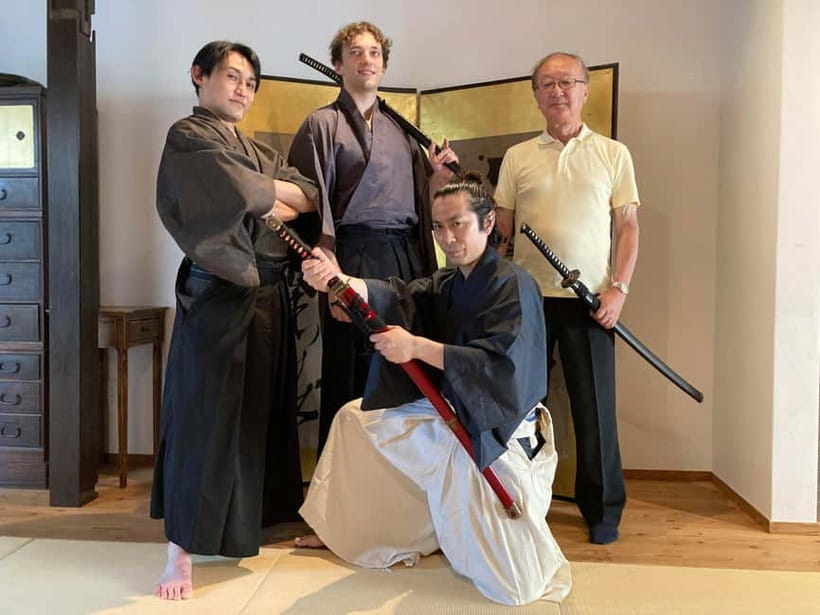
The class starts the way good performance workshops start: you dress up right away. You’ll put on a traditional samurai costume, and after that point, you’re basically treated as “in character.”
This matters because the activity isn’t only about sword technique. It’s about posture, presence, and attitude. When you’re in full costume, small things like how you hold your shoulders and how you acknowledge the instructor feel more natural. The bow becomes less like a classroom habit and more like something you’re doing as part of a ritual.
Costume also makes the photo part easier to enjoy. You’re not stuck changing clothes after you’ve worked up sweat. Instead, you become your samurai first, then the camera-friendly moments feel like the “reward” at the end.
Learning Samurai Bowing and Respect: Technique With Meaning
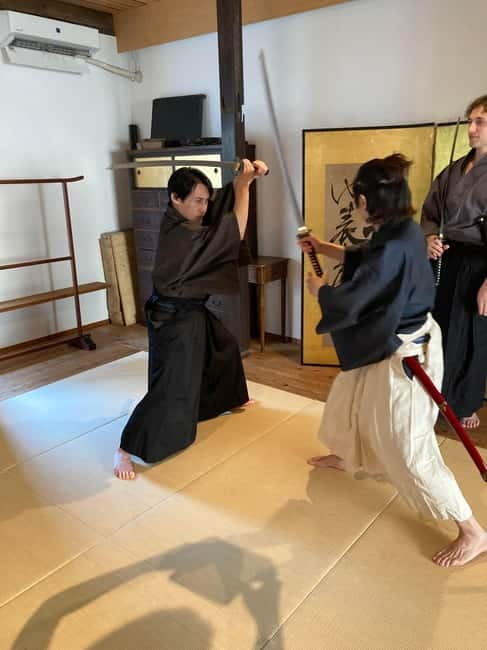
Before the swordwork really gets going, you learn how to bow and how respect fits into the interaction. The lesson includes guidance on how to show respect to your opponent with the sword, not just how to swing it.
That might sound like a small, symbolic step. It isn’t, because bowing and stance are the base layer for everything that comes later. If you get this part right, your sword movements look more intentional. If you skip it or rush through it, the whole thing can feel like random arm exercises.
What you can expect during this portion:
- Instructor guidance on stances and movements
- A focus on respectful presentation (bowing first, then action)
- A short explanation of how the sword is treated as part of the interaction, not only a prop
If you’re the type who likes “why this matters,” you’ll appreciate that the class treats etiquette as part of the skill.
Sword Drawing and Stylized Swordplay With Practice Blades
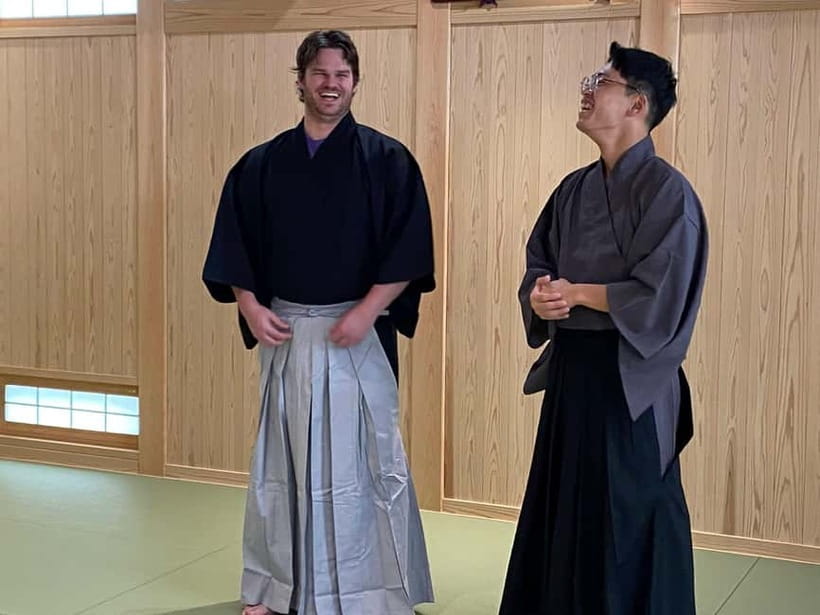
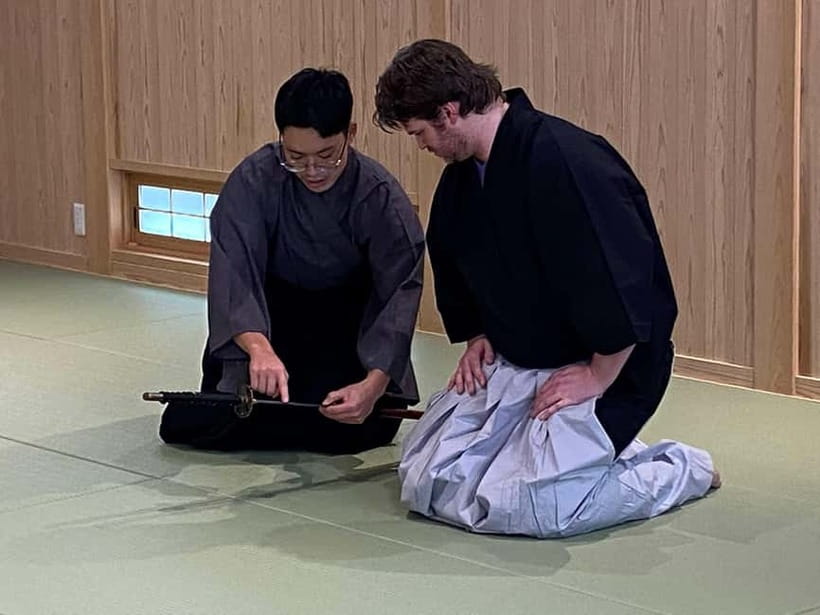
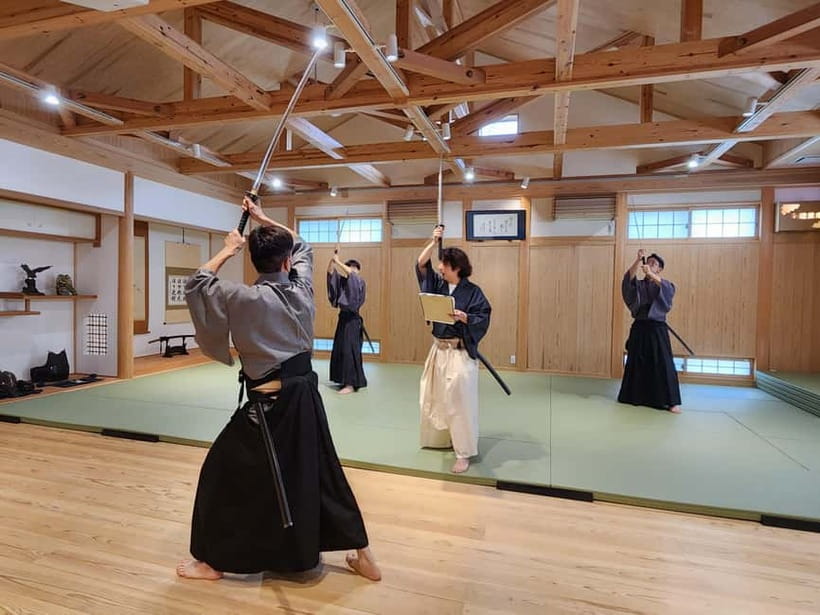
Now for the main event: the swordplay workshop. You’ll learn the fundamental stances, strikes, and movements that define samurai swordsmanship, guided by the master and supported by the interpreter.
You’ll choose a sword from among the practice options. Then you’ll work through basic movements with safety in mind. Since this is a short class, the goal is not to train you like a long-term martial arts student. The goal is to give you a solid set of “starter moves” you can repeat confidently during the photo/video moments.
A fun detail from one of the provided reviews: you may learn “Tate” and different actions with the sword. Even if you’re not familiar with the term, what matters is that you’re doing more than one generic swing. You’re learning a sequence of movements that feels like a mini performance.
You’ll also see the master demonstrate swordsmanship in front of you, which helps you understand what the final choreography is trying to communicate.






Optional Choreographed Duel: Safe, Controlled, and Camera-Ready
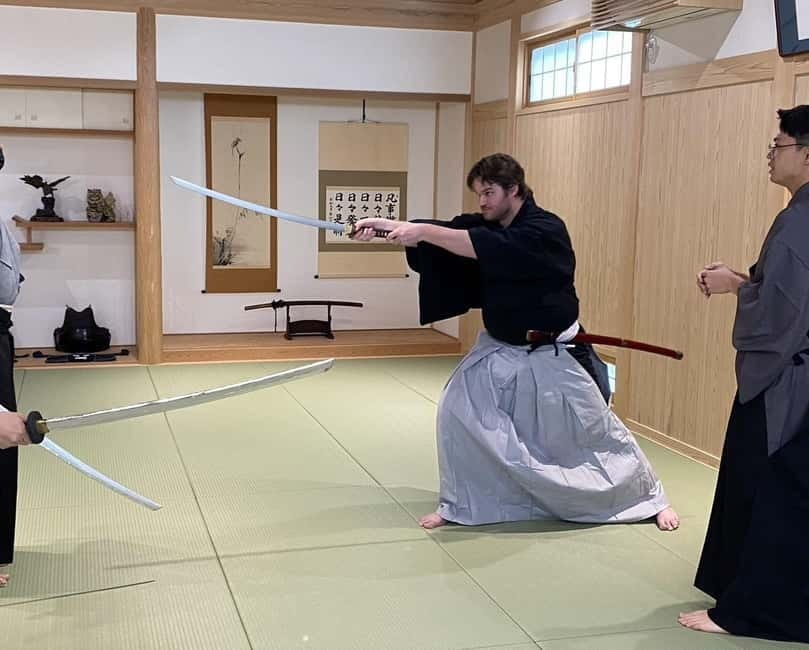
There is an optional part where you perform a choreographed sword fight. It’s designed to reflect the intensity of historical samurai duels, but in a safe and controlled environment.
This portion is a big reason the experience doesn’t feel like a basic “swing the sword” class. It turns practice into something you can show on your phone or in your photo set. And if you’re traveling with kids, it’s often the moment they remember most, because it looks dramatic even when it’s carefully structured.
The optional duel is not the place to go for bragging rights. You’re there to learn the rhythm and follow cues. If you relax and do what the instructor says, you’ll leave feeling proud, not clumsy.
The Photo Shoot, Video Moment, and Your Certificate Keepsake
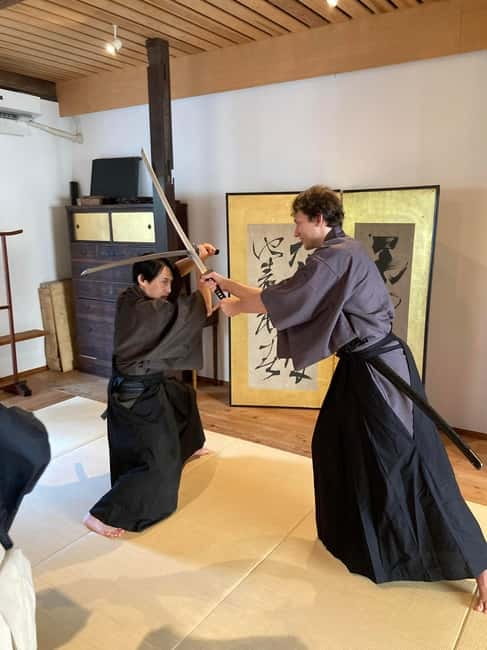
This class is clearly designed with memory-making in mind, and you’ll feel that right at the end. After the training and choreography practice, you’ll get a photo session in your costume.
Depending on the session flow, you’ll also have a camera-focused moment where you capture your “SAMURAI” performance. One review specifically called out acting and camera work, and another mentioned that their child liked the scene that was recorded. So, expect that you’ll do more than stand still in a costume. You’ll recreate a samurai moment with guidance.
Then you receive a completion certificate. That might sound like a small thing, but it’s meaningful for two reasons:
- It gives you a physical proof of the experience.
- It helps the memory last beyond the photos on your phone.
If you’re the kind of traveler who likes leaving with something tangible, this will land well.
Price and Value: Does $90 for 90 Minutes Add Up?
At $90 per person, you’re paying for a packaged experience: a live instructor/master, interpreter support, costumes, practice swords, and a photo shoot plus certificate. For Tokyo, where many “activities” are really just guided walks, this is closer to a workshop.
Is it a bargain? It depends on your travel style:
- If you enjoy hands-on activities and want a once-in-a-trip memory that’s genuinely different from restaurants and temples, the price starts to make sense.
- If you’re only looking for a quick cultural overview, you might feel this is more performance-based than academic.
Where the value shows up is in the full package. You’re not paying separately for a costume rental, a photo session, and a class. You’re buying a guided experience that covers all those pieces in one block of time.
Also, the class being limited to small group size (up to 6) is important. It can make instruction feel more personal and reduce waiting time.
What to Bring, What to Wear, and How to Prepare
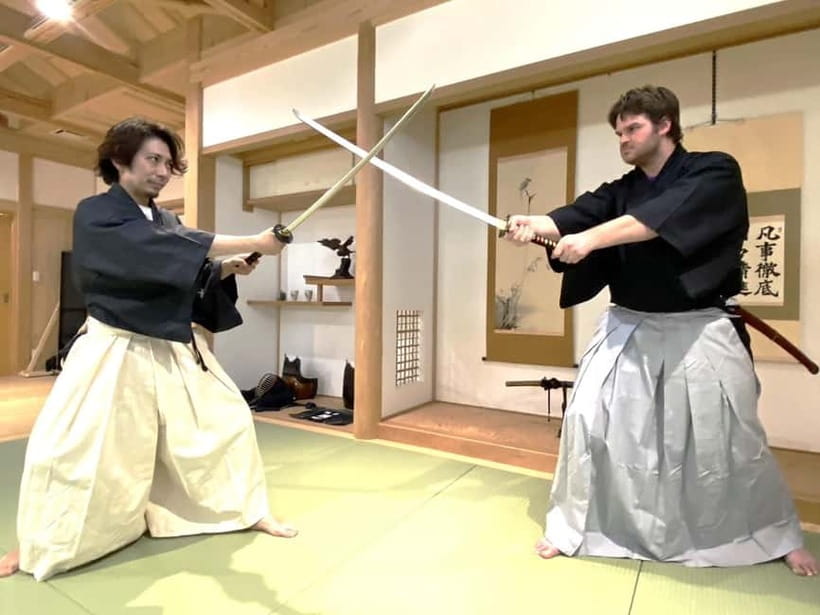
The class gives you costume and practice swords, so your job is mostly comfort.
Bring:
- Towel
- Water
- T-shirt
Practical note: a towel and water matter because you’ll be moving in layers once you’re in costume. Even if the session isn’t physically exhausting, you’ll feel better with basic prep.
You’re also told that smoking and food aren’t allowed during the activity. If you can’t prepare the items by the day of the event, the provider says you can contact them and they’ll provide alternatives.
Not suitable for:
- Pregnant women
- People with back problems
This is worth respecting. Sword stances and movement may not be safe or comfortable depending on your condition.
Who This Samurai School Experience Is Best For
This class fits best with people who want a hands-on Tokyo activity with real interaction. It’s great if you:
- Want a photo and memory that doesn’t feel generic
- Like short, structured lessons
- Enjoy performance elements like camera work and choreography
It can also work well for families, because one booking included a 10-year-old and focused on costume selection and the choreographed scene. Still, because your body uses stances and movement, it’s smart to judge readiness realistically, especially if you have any mobility or back concerns.
Should You Book This Samurai Lesson in Asakusa?
I’d book it if you want a fun, memorable way to experience samurai culture that goes beyond watching from the sidelines. The combination of bowing etiquette, practice sword workshop, costume dressing, and a guided photo/video moment makes it feel like a complete package for the money.
Skip it if:
- You want a long, history-heavy class (this is short and performance-oriented)
- You have back issues or conditions that make movement difficult
- You prefer activities with zero coordination or posing
If you’re on the fence, here’s your simplest decision rule: if you’d enjoy dressing up, learning a short sequence of sword moves, and walking away with photos and a certificate, this is your kind of Tokyo stop.
FAQ
How long is the Samurai School experience?
It lasts 90 minutes.
Where do I meet for the class?
You meet in front of 颯志館(Soushi-Kan / Soushi-Kan), address 4-6-2 Shimo, Kita City, Tokyo 115-0042. The nearest station is Shimo Station on the Namboku Line (about a 6-minute walk from Exit 2).
What’s included in the price?
It includes an English-speaking interpreter, photo shoot, samurai costumes, practice swords, and a completion certificate.
Do I need to speak Japanese?
No. Instruction is provided in English and Japanese.
What should I bring?
Bring a towel, water, and a t-shirt.
Is there a small group size limit?
Yes. The class is a small group limited to 6 participants.
Is it wheelchair accessible?
The experience is listed as wheelchair accessible.