REVIEW · TOKYO
Personal prayer at Meiji Shrine!
Book on Viator →Operated by 明治神宮 古代祈祷ツアー Meiji shrine ancient prayers tour · Bookable on Viator
A shrine visit is easy to admire and hard to do right. This tour helps you navigate Shinto practice with calm, clear guidance, then lets you take part in a personal prayer inside Meiji Jingu. You’ll get the meaning behind what you’re doing, not just the checklist.
I especially like how the guide teaches the correct behavior at the torii gates and along the approach. Second, I like that your prayer isn’t generic: you write your intentions (family safety, health, marriage, academic success, and more), then you witness a full ceremony that includes purification, gagaku, and a miko dance performance.
One consideration: the personal prayer fee (starting at 5,000 yen) and any extra items you buy privately are not included in the $98 price. Also, the tour isn’t recommended for anyone who struggles with sitting straight during the ceremony.
In This Review
- Key highlights worth your time
- Why a private Meiji Jingu prayer feels different from a normal visit
- The meeting point and the first torii photo moment
- Walking the approach: torii manners that keep things respectful
- Purification at the fountain: hands, mouth, and bows
- Kaguraden blessings: writing your intentions and joining the ceremony
- Gagaku and miko dance: UNESCO music you can actually watch
- What you receive after the ceremony: shinsen, omiki, and the ofuda
- Price and logistics: is $98 good value for this Shinto session?
- Who should book this tour (and who might want a different plan)
- Should you book this Meiji Jingu personal prayer tour?
- FAQ
- FAQ
- How long is the tour?
- Is this a private tour?
- What’s the main extra cost besides the $98 price?
- Do I need to speak Japanese to fill out the prayer form?
- Is there a place for hand and mouth purification?
- Can I take photos throughout the tour?
- What should I do for worship at the main shrine area?
- What if the weather is bad?
- Who should avoid this tour for comfort reasons?
Key highlights worth your time
- Correct torii-and-approach etiquette so you don’t accidentally misstep
- Personal prayer intentions you write yourself, then carry into the ceremony
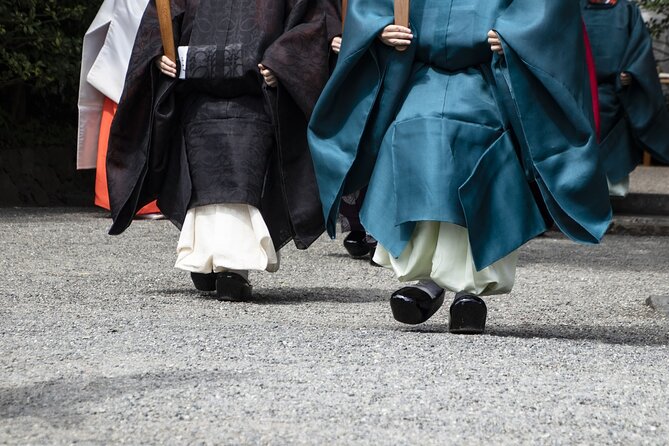
- Purification ritual led by priests with bells and ceremonial tools
- Gagaku, a UNESCO Intangible Cultural Heritage performance on traditional instruments
- Miko (shrine maiden) dance as part of the Kaguraden ceremony
- Shinsen and omiki offerings you receive at the end (plus an ofuda from the prayer)
Why a private Meiji Jingu prayer feels different from a normal visit
Meiji Jingu is one of Tokyo’s most famous shrine stops. It’s beautiful, peaceful, and very “Japan” in the most practical way: trees, rituals, and traditions you can feel in your body. But if you’re unfamiliar with Shinto, it’s also easy to feel like you’re watching a show you don’t fully understand.
This tour changes that. You’re not just passing through. You’re learning the logic behind what you do—how Shinto turns daily wishes into respectful action, using purification, gratitude, and offerings. That matters because a shrine visit becomes much more meaningful when you know what each gesture is trying to express.
The other big value is that the experience is private. Your group goes at the pace of the ceremony, not the pace of a large crowd. That tends to make questions easier, photos less stressful, and the prayer feel more personal.
You can also read our reviews of more tours and experiences in Tokyo.



The meeting point and the first torii photo moment
You meet at the Big Torii area, then the guide leads you to the spot “under the second torii gate.” It’s a smart start: you get a quick orientation right where the setting really begins.
Here’s what you’ll focus on early:
- The torii’s unique features (useful when you’re trying to understand why this gate looks like it does)
- Nearby displays of sake barrels and wine barrels
- A waka poem posted prominently near the front
The guide also helps with photos right at this stage. That’s not just for fun. If you get a few good images early, you stop worrying about it later and can pay attention once the ritual moments begin.
Walking the approach: torii manners that keep things respectful
From the second torii gate, you’ll walk toward the third torii gate. This section sounds simple—just walking—but it’s where many people slip.
The guide specifically prepares you for proper approach etiquette and for passing through torii gates. The goal is basic respect: Shinto spaces often have unspoken rules, like how you move through sacred thresholds. If you don’t know them, it can come off as careless even when you mean well.
You’ll also get guidance for what you’re seeing: waka poems, and the important buildings you pass. And yes, you’ll be encouraged to take photos at the locations you’re allowed to, with help from your guide when you want it.
Practical tip: wear comfortable shoes. This is still a shrine walk, and the route is part of the experience.
Purification at the fountain: hands, mouth, and bows
Next you’ll reach the purification fountain and cleanse your hands and mouth before entering the main shrine area. This is one of those moments that’s short, but it sets the tone. You’re basically telling the shrine space you’re about to participate, not just browse.
After purification, you experience the same method of worship used by the general public. The ritual includes:
- Offering a coin
- Two bows
- Two claps
- One final bow
The guide is there to keep you in rhythm. That matters because the sequence is easy to fumble if you’re rushing or trying to copy from memory. You’ll also get guidance about where photography is not allowed, so you don’t accidentally step into a restricted area with your camera up.
This part often hits people hardest for a reason that’s not mystical: it creates a moment of stillness. When you repeat the gestures with correct timing and attention, your mind quiets down fast.
Kaguraden blessings: writing your intentions and joining the ceremony
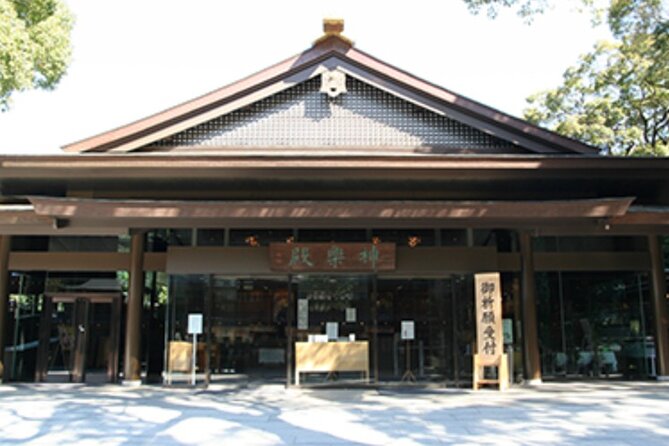
Now comes the heart of the tour: the Kaguraden area, where you receive individual blessings through a more formal ceremony.
First, you fill out an application form at the entrance. You’ll indicate your prayer intentions—examples given include:
- World peace
- Household safety and travel safety
- Recovery from illness
- Business success
- Finding a good match (marriage-related hopes)
- Safe childbirth
- Academic achievement
You’ll also provide your address and name on the form. The forms are available only in Japanese, so translation support is included, and the guide helps you handle it smoothly. That’s a practical win. You want your wording to be clear, and you want the process to feel calm, not like you’re guessing.
After you submit the form along with the required offering fee (starting from 5,000 yen for personal prayer), you proceed to the altar area for the ceremony.
What happens during the ceremony:
- A drum resonates as priests perform a purification ritual using sacred tools
- The purification is meant to bring a sense of peace and fulfillment
- Then you’ll witness gagaku (traditional court music) and miko dance
Photography rules may apply here too, and your guide will point you to what’s allowed.





Gagaku and miko dance: UNESCO music you can actually watch
If you like cultural performances, this is the section you’ll remember.
Gagaku is traditional court music played on ancient instruments, including decorated drums and flutes. It’s designated as a UNESCO Intangible Cultural Heritage, and in this ceremony setting you don’t just hear it as background.
You watch it as part of a ritual flow:
- The ceremony moves from purification to music
- Then miko dance performance adds a visual layer of meaning
- Priests use sacred tools during purification, reinforcing that this isn’t a staged concert
The miko are dressed in traditional costumes and dance gracefully as part of the event. It’s one of those experiences where the details come together: music, movement, and the sense that everyone present understands what the ritual is trying to do.
Small reality check: this portion is not built for maximal chatting. You’ll get more out of it if you treat it like a performance with purpose—quiet attention, respectful posture, and limited distractions.
What you receive after the ceremony: shinsen, omiki, and the ofuda
When the ceremony concludes, it finishes with offerings and sacred sake. You’ll receive sacred offerings (shinsen) and drink sacred sake (omiki).
The guide explains the roles of each:
- Shinsen: offerings presented to the deities during the ceremony and later shared with participants as a souvenir. It’s often in the form of nori (seaweed) and is meant to be enjoyed at home.
- Omiki: sacred sake offered to the deities, with a portion shared with participants. At the exit, you receive a small cup, and a shrine maiden pours the sake for you to drink on the spot.
Then there’s the key promise of personal prayer: you receive an ofuda, an amulet filled with your wishes and with the power of today’s prayer.
This is where the tour becomes more than a cultural walkthrough. You leave with an item connected to what you asked for—something you can keep near you and treat as a reminder of your intentions.
Price and logistics: is $98 good value for this Shinto session?
At $98 per person, this is priced like an experience, not like an entry-ticket add-on. And that’s fair, because you’re paying for more than access.
Here’s where the value comes from:
- The tour includes translation help for the application form and information translation fees
- You get a guide to teach proper etiquette, which is the difference between watching and participating
- You experience a structured ceremony with purification, gagaku, and miko dance
- Your personal intentions are part of what happens in the Kaguraden
Now, what costs extra:
- The personal prayer fee is not included and starts from 5,000 yen
- Any amulets or other items you buy privately are also extra
So the real cost depends on whether you plan to do the personal prayer itself (the central part of the tour). If you want that, budget for both the $98 and the prayer offering.
One more practical detail: it’s a mobile ticket experience, and confirmation is provided at booking time. That tends to reduce friction on arrival, especially in a shrine setting where you don’t want to be fumbling.
Finally, timing matters. The overall duration is about 1 hour 30 minutes. That’s long enough to do the full ritual flow, but short enough that it won’t eat your entire day.
Who should book this tour (and who might want a different plan)
This is a great fit if:
- You want to understand Shinto practice without feeling lost
- You care about correct etiquette at torii gates and during worship
- You want a personal prayer experience connected to your specific wishes
- You appreciate seeing gagaku and miko dance as part of a ceremony, not as a generic performance
It may be a poor fit if:
- You have pain when sitting straight for the ceremony
- You’re mainly interested in sightseeing photos and don’t care about ritual participation
- You dislike structured moments where you’re guided step-by-step and asked to follow instructions
Also, a note on real-world operations: there have been cases where communication issues or interpreter health affected the day. That’s not something you can fully predict, but it’s a reason to arrive on time (early, even) and keep your phone accessible if the guide needs to reach you.
Should you book this Meiji Jingu personal prayer tour?
I think you should book it if Meiji Jingu feels important to you beyond a quick photo stop. The tour’s strength is translation plus etiquette. That combination is what turns a famous shrine into a personal, respectful moment.
I’d pass if you already know Shinto well and are planning to handle worship independently. In that case, you might not need a guide to interpret the sequence, and you could visit on your own at a lower overall cost.
But if you want the full experience—walking the right way, doing purification, witnessing UNESCO-listed gagaku, seeing miko dance, and leaving with an ofuda tied to your wishes—this tour is a solid way to get it right without the stress.
FAQ
FAQ
How long is the tour?
The experience runs about 1 hour 30 minutes.
Is this a private tour?
Yes. It’s private, so only your group participates.
What’s the main extra cost besides the $98 price?
The personal prayer fee is not included. It starts from 5,000 yen for the personal prayer, and any amulets or items you purchase privately are extra too.
Do I need to speak Japanese to fill out the prayer form?
You don’t. The form is in Japanese, but the tour includes translation support and the guide helps you complete it smoothly.
Is there a place for hand and mouth purification?
Yes. You cleanse your hands and mouth at the purification fountain before you proceed to the main shrine area.
Can I take photos throughout the tour?
You can take photos in many places, and the guide will help you. There are also areas where photography is not allowed, and you’ll be guided around those.
What should I do for worship at the main shrine area?
You’ll be guided through the worship method that includes offering a coin, two bows, two claps, and one final bow.
What if the weather is bad?
The experience requires good weather. If it’s canceled due to poor weather, you’ll be offered a different date or a full refund.
Who should avoid this tour for comfort reasons?
It’s not recommended for those who have pain when sitting straight during the ceremony.