REVIEW · TOKYO
Mt. Fuji Panoramic Ropeway, 5th Station, And Oshino Hakkai Tour
Book on Viator →Operated by Trevopedia Wonders · Bookable on Viator
Fuji in your camera before noon. This full-day guided loop takes you from Shinjuku out to Lake Kawaguchi, up to the Mt. Fuji 5th Station Police Box, and then down to the ponds and thatched houses of Oshino Hakkai. I like how the tour mixes big-view moments with calmer, more traditional stops, and it also includes time to talk with other people who are into the same sights.
What I like most is the pacing: you get dedicated time at the ropeway for photos, plus breaks that don’t feel rushed. I also like that the plan includes an included lunch and that the sights are grouped around the same Fuji region, so you’re not spending your whole day just commuting.
One consideration: the ropeway needs on-site queuing and weather can change the experience. If the ropeway is suspended or the road to the 5th Station closes, the itinerary may shift (often to keep you moving), so build some flexibility into your day.
Key takeaways before you book
- Ropeway photo window: the Mt. Fuji Panoramic Ropeway is built into the day for maximum viewing time and good photo chances.
- 5th Station at altitude: you’ll reach about 2,300 meters (7,546 feet), which is a big change from Tokyo.
- Two different kinds of scenery: Lake Kawaguchi/Oishi Park for open Fuji views, then Oshino Hakkai for ponds and traditional homes.
- Small group size: up to 20 people, which makes the schedule feel more manageable.
- Lunch is included: fewer meal decisions, and more time to enjoy the stops.
In This Review
- From Shinjuku to Fuji: what this full day trip is really like
- Mt. Fuji Panoramic Ropeway: your best chance for photos and quick views
- Lake Kawaguchi and Oishi Park: calm timing for Fuji framing
- Mt. Fuji 5th Station Police Box: altitude, weather, and what to do up there
- Oshino Hakkai ponds: traditional thatched houses with real spring water
- Timing, weather, and what to pack (so the day doesn’t feel stressful)
- Price and value: is $119 worth it for this Fuji day?
- When this tour is the right fit (and when it isn’t)
- Should you book this Mt. Fuji day trip?
- FAQ
- What time do I meet, and where is the meeting point?
- How long is the tour?
- What’s included in the $119 price?
- Are tickets already reserved for the Mt. Fuji Panorama Ropeway?
- What happens if the ropeway can’t run because of weather?
- What if the road to Mt. Fuji 5th Station is closed?
- Can I request an English-speaking guide?
From Shinjuku to Fuji: what this full day trip is really like
This tour runs about 9 to 10 hours, and it starts early. You meet near the Shinjuku West Exit by the Shinjuku Island Tower LOVE statue, with meeting time listed at 07:45 and departure at 08:00. The end point is back at the meeting spot, so you’re not stuck figuring out trains after a long day.
The route is designed to pack in several Fuji-related highlights without making you navigate the region on your own. You’ll also have a built-in rhythm: ride, stop, walk, photo, rest. That matters on a day trip from Tokyo because fatigue sneaks up fast, especially when you’re aiming for altitude at the 5th Station.
Group size caps at 20 travelers, and the format is ideal if you want light conversation with people who are there for the same reason. If you prefer quiet, you still get breaks that aren’t constant movement.
Language support is practical: Chinese/Japanese/English service is available, and you can request an English-speaking guide when booking, but it’s not guaranteed.
Mt. Fuji Panoramic Ropeway: your best chance for photos and quick views
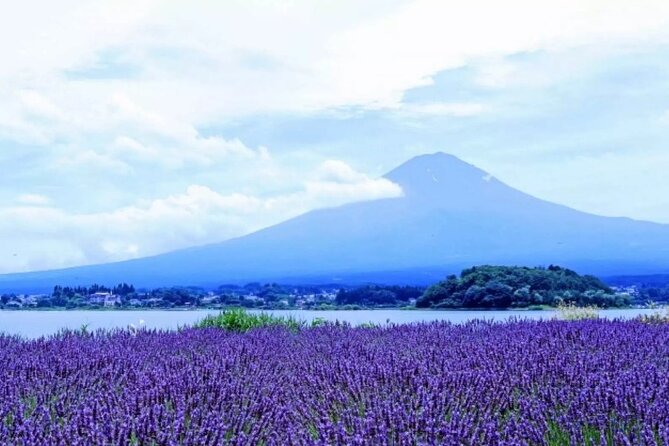
Your first big view moment centers on the ropeway area near Lake Kawaguchi (the Kawaguchiko Ropeway is referenced). The tour lists this stop as around 4 hours, with admissions included as part of your package.
Here’s the key detail that affects your day: Mt. Fuji Panorama Ropeway cannot be reserved in advance and requires queuing on site. That means your experience depends on how busy it is that morning, and it’s one reason this tour is scheduled with a long enough block to absorb wait time.
What you’ll get from the ropeway is mostly about perspective. Between the cabins and the viewpoints, it’s one of the easiest ways to scan for Fuji’s shape while you’re already in the right area. If the weather is clear, this is where your best Fuji photos typically come from—so I’d treat this segment like your “photo work block,” not just a ride.
A smart contingency is included: if the ropeway is temporarily suspended due to weather conditions announced by the authority, the Lake Kawaguchi Ensoleille cruise may be arranged instead. That doesn’t guarantee the exact same photos, but it keeps you from losing the whole morning to downtime.
Practical tip: wear shoes you can stand in. Ropeway queues are standing queues, not strolling queues.
You can also read our reviews of more tours and experiences in Tokyo.



Lake Kawaguchi and Oishi Park: calm timing for Fuji framing
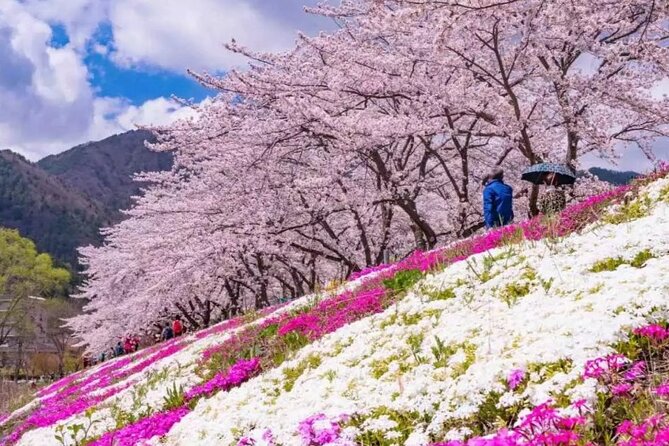
After the ropeway area, you shift to Oishi Park, a stop planned for about 1 hour. Oishi Park is known for unobstructed views of Mount Fuji, and this is where the day turns a bit more peaceful.
Why this matters: the earlier part of the day is motion and queueing. Oishi Park gives you a chance to slow down, pick a viewpoint, and wait for the light to land on the mountain. In many Fuji outings, the best shots happen when you’re not rushing and your eyes can adapt to the scale.
Also, Oishi Park is near Lake Kawaguchi, so you’re still in the same overall geography. That keeps the day coherent instead of feeling like you’re bouncing between unrelated places.
If flowers or autumn leaves are in season, traffic can get heavy. The tour notes that during flower or maple viewing seasons there may be serious traffic jams, and it recommends bringing light food. Even though Oishi Park is short, getting stuck in long transit can steal the calm you’re hoping for—so this is where planning your expectations pays off.
Mt. Fuji 5th Station Police Box: altitude, weather, and what to do up there
Next up is the Mt. Fuji 5th Station Police Box at about 2,300 meters (7,546 feet). The stop is listed as about 1 hour with admission included.
This is the “wow, that’s high” segment. Even if you never plan to hike all the way up, the 5th Station gives you a sense of what Fuji looks like when you’re closer to the zone where weather changes fast. It’s also a good place to stand back and look at the bigger context—how the roads and landscapes connect, and how much of Fuji’s presence comes from its scale.
A realistic thing to know: the tour notes that if the road to the 5th Station is closed due to unexpected weather or traffic, the itinerary may change to Kitaguchi Hongu Fuji Sengen Jinja. So you’re not guaranteed that exact viewpoint, but you’ll still get a Fuji-focused substitution.
What I’d do with your 1 hour: keep warm, take a few steady photos, and then give yourself time to just look. At altitude, the air can feel sharper and your eyes work differently. You’ll get more out of staying still for a few minutes than trying to sprint through photo spots.
Bring a coat. The tour explicitly recommends it, and from experience with high-elevation Japan travel, the temperature difference can surprise you even when Tokyo feels mild.
Oshino Hakkai ponds: traditional thatched houses with real spring water
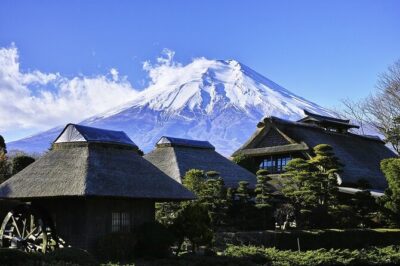
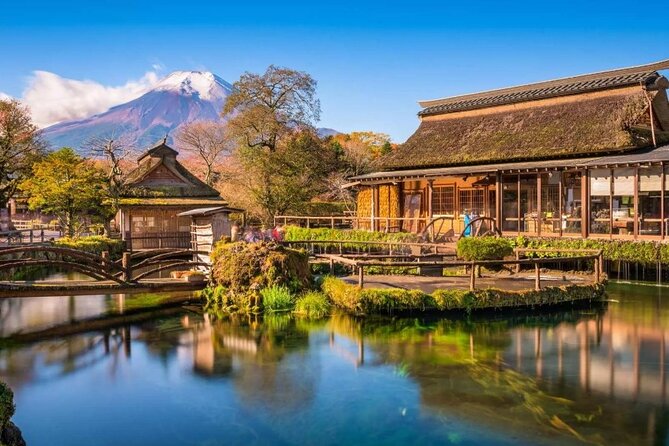
The final major attraction is Oshino Hakkai, planned for about 3 hours. This village is famous for its eight crystal-clear ponds (Hakkai Springs) and traditional thatched-roof houses.
This stop is a nice contrast to the earlier “big view” moments. Instead of chasing Fuji’s outline, you’re looking at water clarity and small-scale details. The eight ponds create a rhythm you can explore by walking the area and comparing what’s in front of you. It’s the kind of place where you slow down naturally.
Even if the mountain isn’t fully dramatic that day, Oshino Hakkai can still feel rewarding because the ponds and village atmosphere are the point. If you’re the type of person who enjoys gentle exploration—short walks, quiet scenes, and photography that isn’t all about skyline shots—this is likely your favorite stop.
Three hours is plenty time to see the ponds, take photos without panic timing, and still keep enough energy for the ride back. That’s not always the case on day trips, so I appreciate the longer block here.
Timing, weather, and what to pack (so the day doesn’t feel stressful)
This tour is described as an estimated itinerary, and traffic conditions can adjust stay times. You’ll also want to remember the tour is weather-dependent in the sense that poor conditions can change or cancel segments.
There’s also an important scheduling note: avoid planning activities late that same night. The tour mentions delays can happen, and it reserves the right to reschedule or cancel if needed.
What to bring:
- Comfortable shoes (you’ll stand and walk)
- A coat (especially for the 5th Station altitude)
- Plan for weather changes and keep expectations flexible if visibility isn’t ideal
Season matters, but in a practical way. The tour specifically flags that during flower season or maple viewing season you can hit serious traffic jams. That’s not a reason to skip; it’s a reason to pack light food and stay patient.
One more logistics note that affects your feel-on-the-day: the ropeway needs on-site queuing. That can be quick, or it can take time. If you’re sensitive to schedules, aim to arrive at the meeting point early so your morning doesn’t start behind.






Price and value: is $119 worth it for this Fuji day?
At $119 per person, the tour is not a cheap throwaway excursion. The value question is really: what does that price buy you besides scenery?
Based on what’s included, you get:
- Transportation
- Admissions
- Lunch
Given that you’re doing multiple major stops—Lake Kawaguchi area, Oishi Park, the 5th Station area, and Oshino Hakkai—group transport and bundled admissions can be a real time saver. Also, the day is long enough that shaving decision-making matters. Having lunch included means you’re less likely to waste your best daylight window hunting for food.
Where the price can feel less attractive is if the day turns into waiting: ropeway queuing plus traffic can stretch the experience. If weather is poor and the itinerary changes, you might not get the exact sequence you imagined. Still, the tour’s structure is designed to keep you busy with Fuji-related alternatives like the cruise if the ropeway can’t run.
In short: if your priority is seeing several Fuji highlights in one shot with minimal planning stress, the price makes sense. If you’d rather control every minute yourself, you might find DIY travel cheaper, but you’ll also take on more navigating and timing risk.
When this tour is the right fit (and when it isn’t)
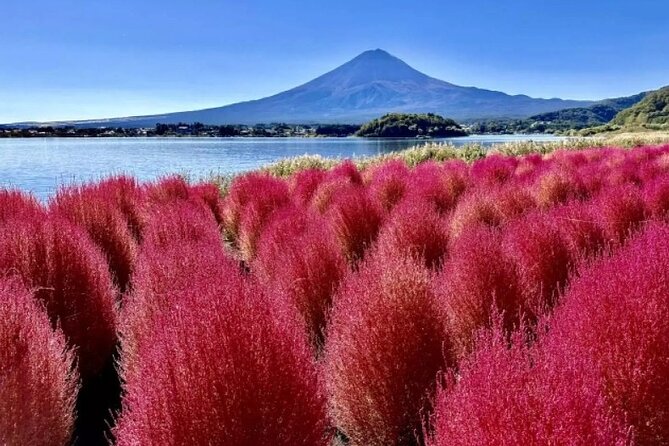
This works best if you:
- Want a guided day that reduces planning from Tokyo
- Like the mix of big views (ropeway and 5th Station) and slower sightseeing (Oshino Hakkai)
- Appreciate small-group pacing (up to 20)
It might not fit as well if you:
- Have a very fixed itinerary with zero buffer time for delays
- Need guaranteed ropeway access with no queuing impact
- Are traveling with someone who struggles with altitude and colder conditions at higher elevations
If you’re a first-timer to Fuji-area sightseeing, this is a strong “confidence builder.” You’ll see the most famous regions—Lake Kawaguchi/Oishi Park viewpoints, then the 5th Station area, then Oshino Hakkai—without having to stitch together transit on your own.
Should you book this Mt. Fuji day trip?
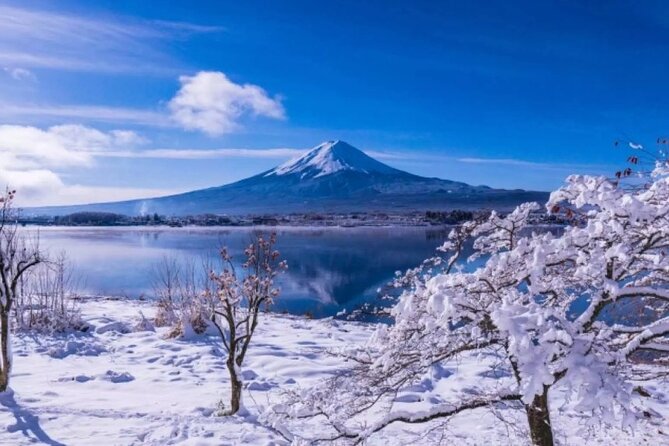
I’d book it if you want a guided, structured day that hits multiple Fuji icons—especially if you enjoy photography time and want the ease of included transport, admissions, and lunch.
I’d pause and plan a backup option if Fuji visibility is the whole point for your trip. This experience can require good conditions, and there are cases where last-minute changes happen close to departure. Also, because the ropeway queues on site, you’re trading control for convenience.
If you’re flexible, dress warm, and give yourself patience, this tour has a lot going for it: the ropeway photo block, the high-altitude perspective at the 5th Station, and the classic Oshino Hakkai ponds close out the day in a calmer way.
FAQ
What time do I meet, and where is the meeting point?
You meet at 07:45 at the Shinjuku West Exit, in front of the Shinjuku Island Tower LOVE statue. The tour departs at 08:00, and you should arrive about 10 minutes early.
How long is the tour?
The duration is listed as about 9 to 10 hours.
What’s included in the $119 price?
The tour includes transportation, admissions, and lunch. Personal expenses and other costs not mentioned aren’t included.
Are tickets already reserved for the Mt. Fuji Panorama Ropeway?
No. The Mt. Fuji Panorama Ropeway cannot be reserved in advance and requires queuing on site.
What happens if the ropeway can’t run because of weather?
If the ropeway is temporarily suspended due to conditions announced by the authority, the tour may arrange the Lake Kawaguchi Ensoleille cruise instead.
What if the road to Mt. Fuji 5th Station is closed?
If access to the Mt. Fuji 5th Station is closed due to unexpected weather or traffic, the itinerary may change to Kitaguchi Hongu Fuji Sengen Jinja.
Can I request an English-speaking guide?
You can request an English-speaking guide in the booking request area, but it’s not guaranteed. If no special request is made, a Chinese-speaking guide is provided.