REVIEW · TOKYO
Ginza Go Kart Experience with Neo Ginza
Book on Viator →Operated by Neo Tokyo Kart Ginza · Bookable on Viator
Tokyo at kart speed is a thrill. This Ginza Go-Kart experience with Neo Tokyo Kart turns famous streets into a windy, photo-ready landmark loop, with a guide who explains what you’re seeing in English and Japanese. I really like the costume and photo shooting setup, because your ride ends with pictures that look like a souvenir, not a blurry afterthought.
I also like the small-group format (max 6), which means you can actually ask questions and get comfortable before you start moving. The main drawback is the driving license rules: you must meet specific requirements for driving in Japan, and the paperwork can be complicated depending on where your license comes from.
In This Review
- Key Points You Should Know Before You Go
- What Makes Neo Ginza Go-Karting Feel Different
- Where You Start in Shintomi (And Why It’s Convenient)
- The Included Costume + Photo Moment That Becomes Your Real Souvenir
- The Route: From Zojoji Temple to Kabuki-za Without the Waiting
- Zojoji Temple: Your First Big Landmark Moment
- Tokyo Tower: The View You Can Actually Feel
- Imperial Palace Area: Calm Contrast in the Middle
- Tokyo Station: The Big City Checkpoint
- Kabuki-za Theater: A Strong Finish With Character
- Day vs Night: Which Works Better for Your Trip
- Safety, Gear, and the Driver License Reality Check
- Staff Help, Social Energy, and Why Small Groups Matter
- Price and Value: Why $65 Can Make Sense
- Practical Tips So You Feel Ready on Arrival
- Who Should Book This Go-Kart in Ginza
- Should You Book the Ginza Go-Kart Experience with Neo Ginza?
- FAQ
- How long is the Ginza Go-Kart experience?
- What landmarks do you drive past?
- What’s included in the price?
- Do I need a driver’s license to participate?
- Is a GoPro included?
- Is the tour affected by weather?
- Can I cancel for a full refund?
Key Points You Should Know Before You Go
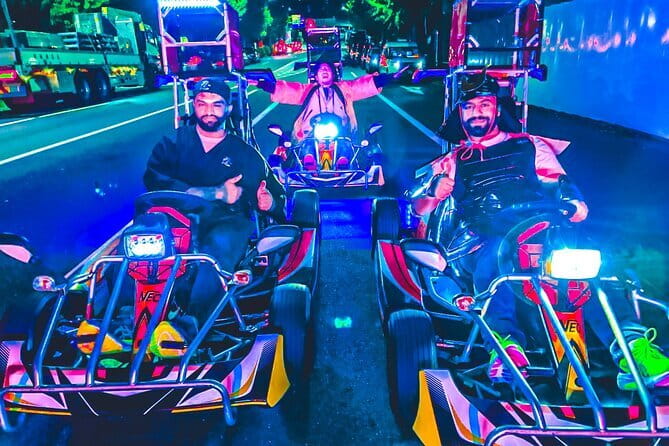
- Costumes are part of the experience, and the photo shooting service helps you leave with real keepsakes
- Max 6 people per kart tour makes it easier to hear the guide and stay together
- Landmarks on the route include Zojoji Temple, Tokyo Tower, the Imperial Palace area, Tokyo Station, and Kabuki-za
- Night is a standout option, with city lights and extra energy compared to daytime runs
- Go-karting is weather-dependent, so plan for a backup if conditions are poor
What Makes Neo Ginza Go-Karting Feel Different
A go-kart in Tokyo is not just about speed. It’s about perspective. In a city where you usually look at landmarks from sidewalks, you get to pass them at street level with a breeze in your face and a camera-ready view.
This tour is designed as a short, focused loop through central sights, and that matters. With about an hour on the activity time, you get a lot of motion without feeling like you spent half a day commuting and waiting around. The small group size also keeps the energy from turning into a big-ticket chaos situation.
The setting is especially good for first-timers. Ginza has lots of well-known buildings, but it also has that layered Tokyo vibe where you can see both classic and modern cues close together. The result is a ride that feels like sightseeing plus something playful you don’t do every day.
You can also read our reviews of more tours and experiences in Tokyo.



Where You Start in Shintomi (And Why It’s Convenient)
The meeting point is in Shintomi (Shintomi 1-chōme) at the building address listed for the experience: Chuo City, Shintomi, 1-chōme 32 (Shintomi 1-chōme biru). Your tour ends back at the same place.
It’s also described as near public transportation, which is a big deal in Tokyo. If you’re already doing other Ginza-area plans, you’re not forced into a far-flung meeting point that eats up your day. For most visitors, that means you can pair this with shopping, a meal, or even a nighttime stroll without rearranging your entire itinerary.
Also note the tour uses a mobile ticket. That’s one less thing to manage, especially if you’re bouncing between transit lines and trying to stay light.
The Included Costume + Photo Moment That Becomes Your Real Souvenir
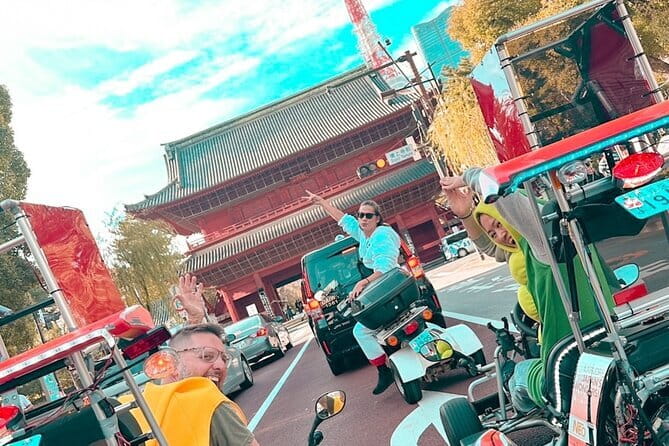
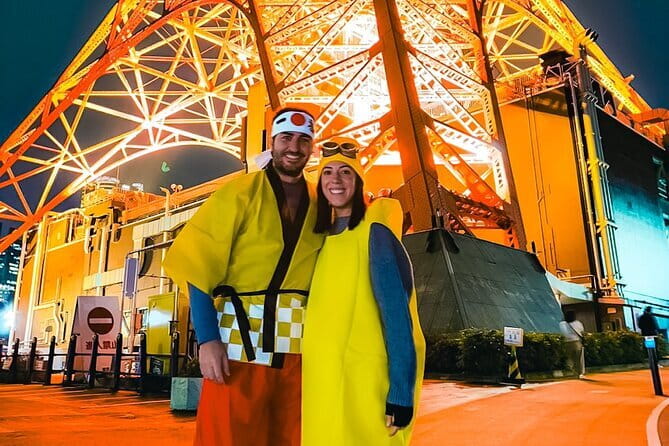
This isn’t just a rental and a route. The experience includes costume rental and a photo shooting service. That’s a meaningful difference, because a lot of activities like this give you gear, then you fend for yourself for photos.
Here’s what that tends to change for you: you’re not just driving past Tokyo Tower while thinking, I hope someone caught the angle. Instead, you get dressed for the vibe and then get photo coverage tied directly to the ride.
If you care about taking home something more than a few phone snapshots, this part is where the value shows up. Even the review-style feedback emphasizes the fun factor of dressing up and getting action shots after the drive, which is exactly what you want from a souvenir photo session.
If you’re thinking about bringing your own camera setup, keep expectations reasonable. You’ll be wearing a costume and concentrating on driving, so the included photo service is what really does the heavy lifting.
The Route: From Zojoji Temple to Kabuki-za Without the Waiting
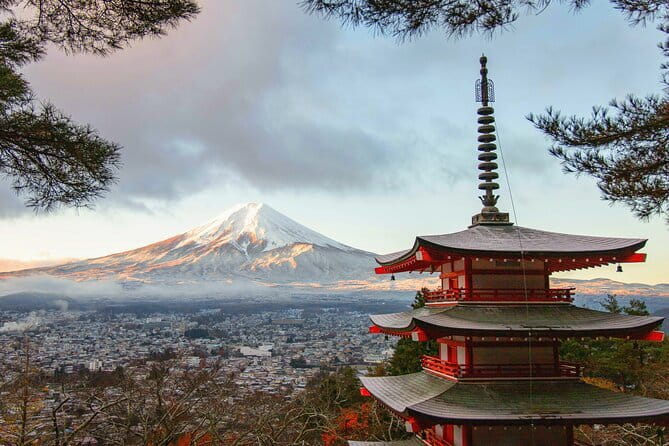
The loop is built around famous, instantly recognizable spots. You pass through or around:
Zojoji Temple: Your First Big Landmark Moment
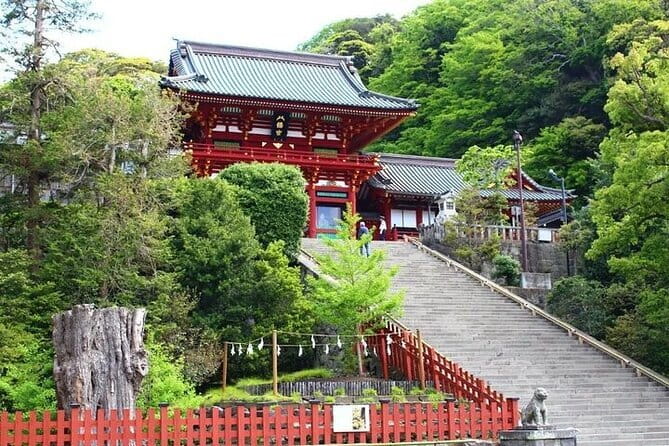
You drive through Zojoji Temple, which gives you a strong start. This is the kind of stop that helps you get oriented fast because it’s visually distinct even if you’re not a temple-history expert. The feeling here is less like museum sightseeing and more like stepping into a postcard view while you’re moving.
A practical note: the start of the tour is often when you’re still adjusting to kart handling, so this is a good time to focus on staying calm and following the guide’s timing.






Tokyo Tower: The View You Can Actually Feel
Next comes driving around Tokyo Tower. This is the headline for many people, and for good reason. Seeing Tokyo Tower from a different angle is fun in any context, but being in a kart changes the experience. You get motion, wind, and that street-level closeness that doesn’t happen from typical sightseeing stops.
If you want the best photo results, think about light and timing. Night runs tend to make Tokyo Tower and the surrounding streets look sharper and more dramatic, while morning/day rides give you clearer visibility and a crisp Tokyo feel.
Imperial Palace Area: Calm Contrast in the Middle
After Tower energy, you drive through the Imperial Palace area. This stop adds contrast. It’s a change of pace in scenery, and it helps break up the route so it doesn’t feel like you’re just sprinting past the same kind of city texture.
From a visitor point of view, it’s useful because it adds variety. You get one more side of Tokyo besides the shopping district style that often dominates Ginza expectations.
Tokyo Station: The Big City Checkpoint
You then drive through Tokyo Station. This is another landmark you immediately recognize, even from far away. The station area also gives a sense of scale and modern-city rhythm as you pass through.
This segment is likely where you’ll notice how the tour balances sightseeing with real driving. You’re not treated like a bus tour, where people point and stop. You’re moving through Tokyo, so your eyes get trained to track streets like you live here.
Kabuki-za Theater: A Strong Finish With Character
The ride also includes driving through Kabuki-za Theater. This is where Tokyo flavor feels extra cultural, because it’s a landmark tied to performance and identity. Finishing near Kabuki-za can leave you with that, Okay, I really did Tokyo, feeling.
It’s a good close because the theater area looks photogenic and gives you a satisfying endpoint for your kart loop.
Day vs Night: Which Works Better for Your Trip
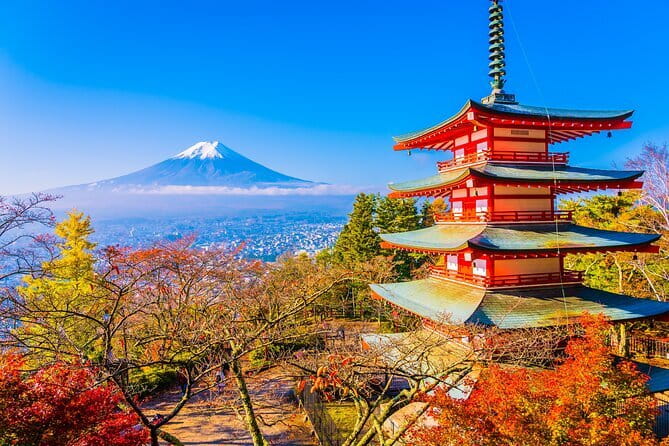
If you have any flexibility, night is a strong choice. One of the most consistent pieces of advice is to try the after-dark slot, because the city lights and the general energy feel louder and more fun than daytime. Tokyo Tower and the street scenes often look more dramatic once the sun is down.
Daytime has its own appeal. Morning or daylight runs can feel cleaner and more straightforward for visuals, especially if you like sharp landmark photos. One review-style note highlights a refreshing breeze on a morning kart tour, which suggests that the air quality and comfort can be noticeably better depending on season.
My take: if your priority is photos and atmosphere, book night. If you want easy visibility and a calmer vibe, a daytime slot is still worth it.
Safety, Gear, and the Driver License Reality Check
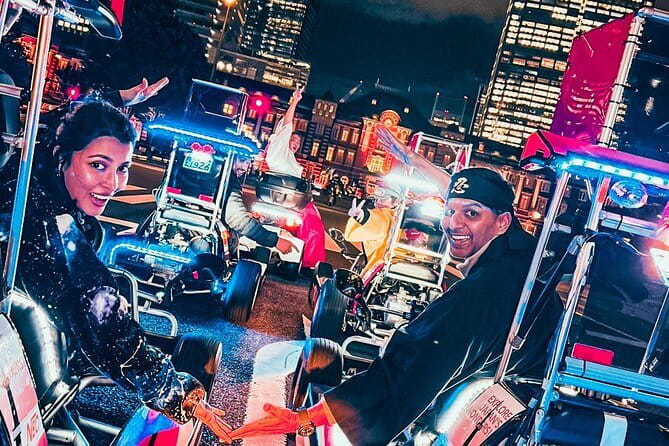
The tour includes a safety briefing as part of gearing up, and staff are described as kind and helpful. That matters because go-karts feel fast in a new way when you’re first strapped in and placed on an urban route.
Still, the biggest consideration is legal: Japan requires specific driving documents. This is mandatory for this activity. You’ll need:
- Your original driving license
- An international driving permit (hardcopy) issued by your local authority
- Your passport
All three documents are required. The guidance also emphasizes that requirements are complicated and depend on your country. It notes the international driving permit should be under the 1949 convention to legally drive on Japanese streets.
It also flags a list of passport holders for whom this experience is not available. If your passport is from Brazil, China, Indonesia, Mexico, Qatar, or Saudi Arabia, you can’t join.
Finally, there are rules for behavior: if you’re under the influence of alcohol, you can’t ride. Refunds or changes aren’t offered for showing up with incorrect or invalid documents.
So before you fall in love with the idea, do a quick paperwork check. This is the single part most likely to derail the plan.
Staff Help, Social Energy, and Why Small Groups Matter
One thing I really appreciate about formats like this is the chance to meet other people who are willing to do the fun thing. With a maximum of 6 travelers, you’re not lost in a crowd. You can talk with the group, ask questions, and get your confidence up before you start.
The bilingual guide is also a practical advantage. English/Japanese support makes instructions clearer, and it also makes the landmarks more meaningful when someone is explaining what you’re seeing.
One review-style detail that’s worth noting: the guide’s trivia can add extra fun. That’s not required for the drive to be great, but it’s the kind of bonus that makes the hour feel lighter and more memorable.
Price and Value: Why $65 Can Make Sense
At about $65.03 per person, you’re paying for several things at once:
- The kart experience for an about 1-hour session
- Costume rental
- Photo shooting service
- An English/Japanese-speaking guide
- A small-group format (max 6)
When you compare that to the cost of renting anything on your own plus the cost of paying for guided transport and photos, the bundle is often where the value shows up. Go-karting by itself can be pricey once you factor in gear, time, and documentation requirements. Here, the photo and costume pieces make the experience feel complete rather than unfinished.
Extras are separate. For example, GoPro rental isn’t included, and there’s mention of SD card sales for 3000 Japanese yen. If you want a big action-camera setup, plan for those add-ons.
Also think about what you’re skipping by going on a guided loop. You’re not trying to figure out where the best street views are or how to coordinate a safe drive route on your own. For many visitors, that saved effort is worth real money.
Practical Tips So You Feel Ready on Arrival
This tour is straightforward, but it runs on a few rules that help you have a smoother time.
- Bring the correct driving docs in hardcopy form. The activity notes that refunds can’t be issued if you show up with incorrect documents. Don’t assume a digital version works.
- Check that you’ll meet the age requirement: participants must be 18 or above.
- Plan for weather. It’s weather-dependent. If it’s canceled due to poor weather, you’ll either get an alternative date or a full refund.
- Wear what works for movement. You’re in a costume and you’ll feel the wind while driving, so comfortable clothing matters.
- Choose your timing based on mood. Night tends to be the favorite for lights and energy, while daytime can be more comfortable for visibility and photos.
If you’re the kind of person who cares about photos, show up ready to be part of the shot. The costume and photo service is built into the experience, so your best results come from taking the moment instead of treating it like an optional add-on.
Who Should Book This Go-Kart in Ginza
This experience fits best if you:
- Want a short, high-energy way to see central Tokyo
- Like photo moments and dressing up
- Enjoy small-group tours where you can ask questions
- Are comfortable handling driving requirements and paperwork
It might be a tough fit if:
- You don’t have the correct license/IDP setup
- You prefer low-speed sightseeing only
- Your trip has tight timing and you can’t handle weather-based rescheduling
If you’re traveling with friends and you want something that feels like a shared story (not just a checklist), this is a strong choice. The social factor is part of the experience because the group size stays small.
Should You Book the Ginza Go-Kart Experience with Neo Ginza?
I think you should book it if you can meet the driving-document requirements and you want Tokyo sightseeing with motion, wind, and landmark variety in about an hour. The costume + photo package turns the drive into a souvenir you’ll actually keep.
I’d skip it if paperwork is uncertain or if you’re the kind of traveler who gets stressed by rules. For the right person, though, this is one of those rare Tokyo activities where the fun is the point, and the landmarks are the bonus.
FAQ
How long is the Ginza Go-Kart experience?
The duration is listed as about 1 hour.
What landmarks do you drive past?
You drive through or around Zojoji Temple, Tokyo Tower, the Imperial Palace, Tokyo Station, and Kabuki-za Theater.
What’s included in the price?
Included are the photo shooting service, costume rental, and an English/Japanese-speaking guide.
Do I need a driver’s license to participate?
Yes. Possession of a valid driver’s license for Japan is mandatory. The activity requires your original driving license, an international driving permit (hardcopy), and your passport.
Is a GoPro included?
No. GoPro rental is not included, and there’s also mention of SD card sales for 3000 Japanese yen.
Is the tour affected by weather?
Yes. The experience is weather-dependent. If canceled due to poor weather, you’ll be offered an alternative date or a full refund.
Can I cancel for a full refund?
Yes. Free cancellation is available up to 24 hours before the experience start time for a full refund. If you cancel less than 24 hours before, the amount paid is not refunded.