REVIEW · TOKYO
Complete Sumo Experience in Tokyo
Book on Viator →Operated by Arumachi · Bookable on Viator
Sumo feels bigger than life. Then it gets close. This complete sumo experience brings you inside a traditional stable to watch training and actual bouts in a way you can’t get from an arena seat. I like that you don’t just observe—you also get hands-on participation by challenging wrestlers. One thing to plan for: the audience participation can stretch longer than you expect, so come with patience (and good energy).
There are two timing options, and the choice affects what the experience feels like. If you book the meal option, you’ll watch the program alongside a chanko-nabe meal—a classic wrestler meal meant to support their body and muscle. Without the meal, the flow shifts to a shorter, no-food format at the afternoon start.
It’s a simple concept with a real payoff: you learn the story of sumo, watch how the sport works up close, and leave with photos and answers. You’ll also get mobile ticket convenience, and the group stays small.
In This Review
- Key highlights
- Why This Sumo Tour Feels Different From Arena Watching
- Chanko-Nabe vs No Meal: Choosing Between the 11AM/7PM and 3PM Options
- Inside the Stable: The Real Setting You Get to See
- Training, Matches, and the Moment You Challenge a Wrestler
- Q&A and Photos: How to Make Your Interaction Count
- Timing and Arrival Tips for the Kiyosumi Meeting Point
- Price in Perspective: Is $138.52 Good Value for a 2-Hour Sumo Access Pass?
- Who This Experience Suits (and Who Might Prefer Something Else)
- Should You Book This Complete Sumo Experience in Tokyo?
- FAQ
- How long is the sumo experience?
- Where does the tour meet?
- Is hotel pickup or drop-off included?
- What’s included in the tour?
- Do I get to eat chanko-nabe?
- What start times are available?
- Is the ticket mobile?
- How big are the groups?
- Can I participate if I’m not an athlete?
- Is there free cancellation?
Key highlights
- Watch sumo training and matches up close in a stable setting, not from far away
- Challenge wrestlers and join in the fun rather than only watching
- Ask questions in a Q&A session and get direct answers from the wrestlers
- Photo sessions with the wrestlers for memorable, real-world proof of your visit
- Optional chanko-nabe meal paired with the show for a more full-bodied experience
- Small group size (max 30) helps keep the experience personal
Why This Sumo Tour Feels Different From Arena Watching
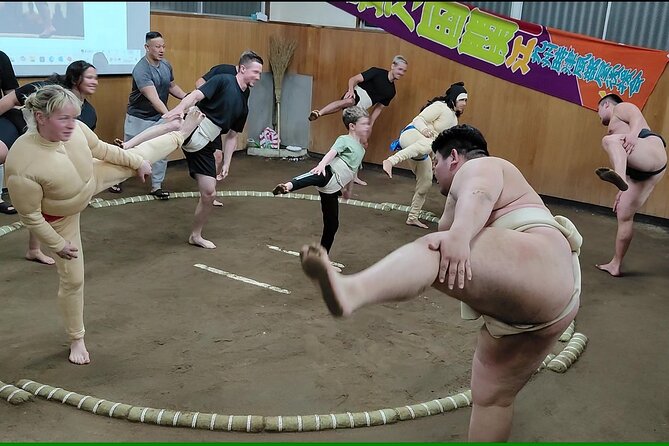
Most sumo experiences fall into two buckets: grand tournament action in a big arena, or morning practice at a stable where you’re mostly an observer. This one combines the best parts of both approaches—while keeping you much closer to the action than a stadium ever would.
The biggest difference is the access. You’re not just watching from a distance. You get to see what the stable looks like and how training and matches play out in that real environment. That matters, because sumo is more than the match itself. It’s routine, discipline, and team rhythm inside a place built around the wrestlers’ daily life.
I also like the pacing of the learning. You get a crash course in sumo by an expert, so you’re not lost when someone explains a technique or calls something out during training. It’s built for a typical visitor—short, direct, and meant to help you understand what you’re seeing.
And then there’s the participation. The experience includes a chance to challenge wrestlers and a Q&A where you can ask questions. That’s a big deal for value. You’ll walk away with answers you could never pick up from TV broadcasts or a match commentary sheet.
You can also read our reviews of more tours and experiences in Tokyo.



Chanko-Nabe vs No Meal: Choosing Between the 11AM/7PM and 3PM Options
This tour comes in two formats, and your start time decides which one you get.
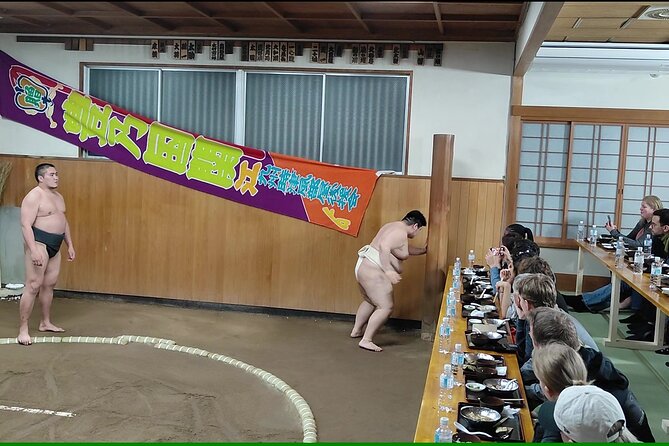
If you pick the option with a chanko-nabe meal, the start times are 11AM or 7PM. You’ll watch the show over the meal. Chanko-nabe is the dish sumo wrestlers eat to support their muscles and body, so it adds context. You’re not just learning that food is part of sumo life—you’re experiencing it at the same time you watch wrestlers train and compete.
If you choose the option without a meal, it starts at 3PM. That’s the simpler, lighter option if you already have plans to eat later. It can also feel more focused if your goal is mainly the viewing and interaction parts: training, matches, challenging, Q&A, and photos.
So how should you choose?
- Pick meal + evening or midday if you want the full cultural feel and don’t mind eating as part of the show.
- Pick 3PM without meal if you like a tighter schedule or you’ve already got food handled.
One practical note: since the experience runs about 2 hours, you don’t want to stack another long activity immediately before or after. Build in a little breathing room so you can arrive calm, not rushed.
Inside the Stable: The Real Setting You Get to See
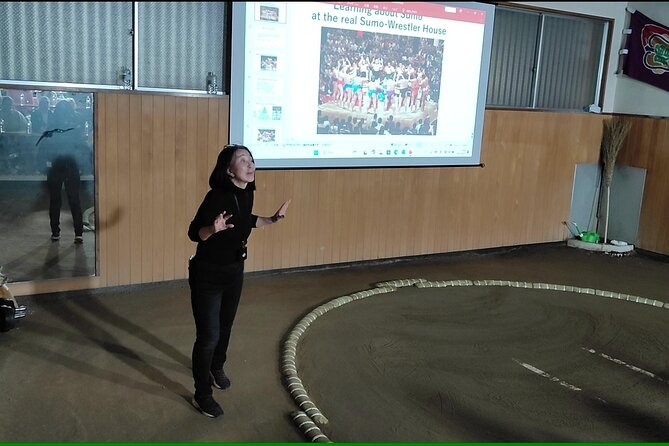
This experience is built around seeing how a traditional sumo stable looks and works. That’s not a throwaway line. A stable has its own logic—how people move, how routine fits together, and how the wrestlers’ world is structured day to day.
You’ll also get an expert crash course before things really pick up. That helps you notice details you might otherwise miss. For example, during training and matches, you’ll be able to connect what you’re seeing to the origin, history, and culture of sumo that’s explained during the program.
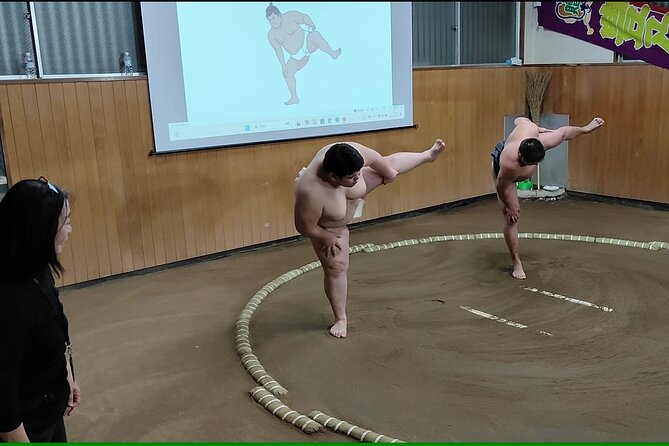
One of my favorite parts of this setup is that it’s not pretend. You’re in the place where the sport’s daily rhythm happens. Instead of only understanding sumo as a series of headline moments, you get to view it as practice and preparation—how wrestlers work on their combat, how training flows, and how the atmosphere shifts when matches start.
And because the group is capped at 30 travelers, you’re more likely to be able to see and participate without being swallowed by the crowd. Small groups can turn a tour from a production into something you can actually follow.
Training, Matches, and the Moment You Challenge a Wrestler
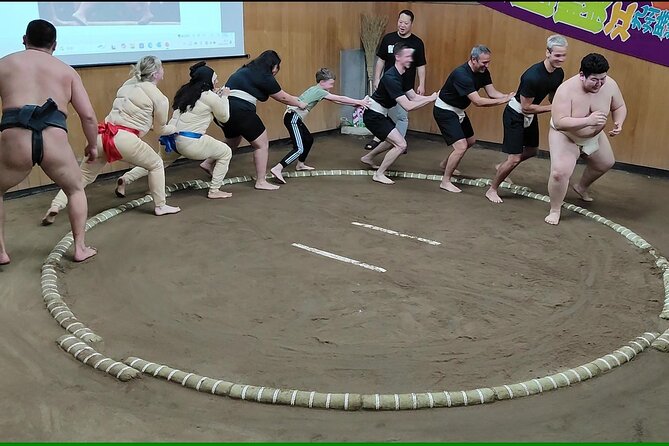
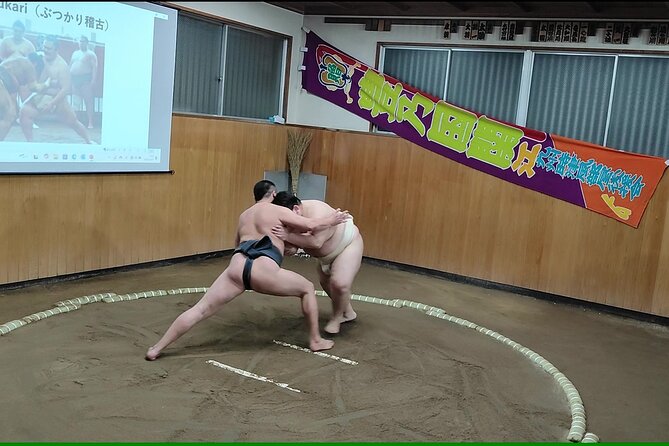
The core program includes training plus actual matches. You’re watching these segments with enough closeness that the sport feels personal, not distant.
You’ll observe how wrestlers train—then you’ll watch matches after that. Seeing training first is smart for two reasons. One, it helps you understand what skills look like before they’re used in a match. Two, it gives context for the technique explanations you hear during the program.
Then comes the part that turns it from a sightseeing activity into an experience. The tour includes a chance to challenge wrestlers. That’s not just a photo-op gimmick. It puts you in the same arena of energy the wrestlers inhabit, with structured participation that keeps the vibe friendly rather than awkward.
A heads-up from a practical perspective: audience participation can run longer than some people expect, and there’s at least one comment noting that it dragged on a bit. Translation: if you’re the type who wants every minute packed with watching, plan for some participation time that isn’t purely about quiet observation.
Still, for most people, that participation is exactly why this tour deserves the attention. It’s the difference between seeing sumo and meeting it.
Q&A and Photos: How to Make Your Interaction Count
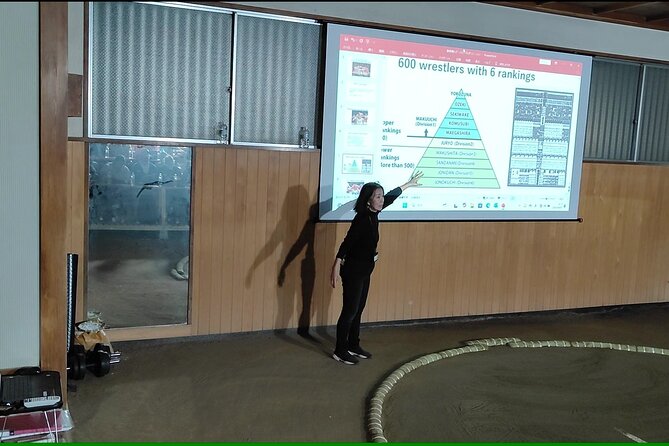
This experience isn’t shy about interaction. It includes a Q&A session with sumo wrestlers and then a photo session with them.
The Q&A is where your crash course pays off. When you understand a little about the sport’s background and the structure of training, your questions stop sounding vague. You can ask about what you just watched, how technique matters, or what life around sumo feels like. The goal isn’t to quiz them like a class. It’s to make your visit make sense.
For the photo time, think of it like this: the photo is the memory, but your attitude is the real value. Be ready to move quickly when your turn comes. Keep your questions short before the photo moment starts, so you don’t lose the chance to get what you want.
If you’re going with family or friends, this is also where you’ll see smiles happen. One of the strongest themes from past guests is that the wrestlers bring humor and a friendly tone into the session. That tends to be more fun than people expect—especially when the event includes your group later participating in some way.






Timing and Arrival Tips for the Kiyosumi Meeting Point
The meeting point is in Koto City, Kiyosumi at 2-chōme 10-11, 北の湖部屋. The tour ends back at the same place.
Two logistics points matter here:
1) You’re not getting hotel pickup and drop-off.
2) You’ll want to arrive early.
Early arrival sounds generic, but it’s genuinely useful for experiences like this. Good seats and a smoother check-in make a big difference when the show starts and participation begins. One comment specifically suggests arriving early to get the best seat.
Also, this is near public transportation, which helps. You’re going to use the neighborhood transit options, not rely on someone meeting you at your hotel. Plan your route so you’re not sprinting at the last second.
You’ll also have a mobile ticket, which is a real convenience—less friction, less printing, fewer last-minute headaches.
Price in Perspective: Is $138.52 Good Value for a 2-Hour Sumo Access Pass?
The price shown is $138.52 per person for an experience lasting about 2 hours, with a maximum group size of 30 and a mobile ticket.
That sounds steep if you compare it to a regular museum ticket. But it’s not a museum. You’re getting structured access to:
- an expert-led crash course
- training observation
- actual matches
- Q&A with wrestlers
- photo sessions with wrestlers
- and the chance to challenge wrestlers
On top of that, you can choose a meal option where the program runs alongside chanko-nabe, a food tied directly to how wrestlers build their bodies.
So the value depends on what you want from Tokyo. If your goal is only to watch sumo like a spectator, you might feel the price is too high versus a standard viewing option. But if your goal is to learn, interact, and come away with photos and direct answers, then this price starts to make sense.
One more point: the tour tends to be booked ahead. The average booking time is listed at 57 days in advance. That’s a sign it’s not a last-minute thing most people wing.
If you’re deciding between two sumo experiences, ask yourself this: do you want to leave with memories that are mostly video and photos of a ring? Or do you want to leave with photos plus Q&A plus participation? This tour leans hard toward the second option.
Who This Experience Suits (and Who Might Prefer Something Else)
This is a great match for:
- You if you want hands-on sumo, not just watching from afar
- You if you enjoy short, structured learning with a subject that can be hard to understand at first
- You if you want the cultural context of sumo plus the physical reality of training
- You if you value photos and direct interaction enough to justify a higher price
It may be less ideal if:
- You dislike group participation time and prefer a strict spectator format
- You’re very schedule-tight and can’t absorb a moment where the program shifts into audience involvement
The tour also says most travelers can participate. That doesn’t mean it’s the same experience for everyone, but it suggests they’re set up for typical visitors rather than only pro-level athletes.
If you’re traveling with friends, the group size and interaction elements can work nicely for shared energy. If you’re traveling solo, the crash course and Q&A can help you feel grounded quickly because you’re not stuck asking yourself what to do.
Should You Book This Complete Sumo Experience in Tokyo?
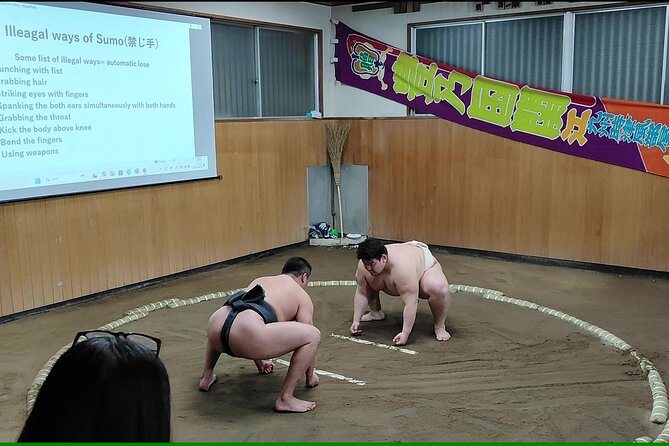
If you want a sumo experience that feels close to real life—stable atmosphere, training, matches, and actual conversation—then yes, you should seriously consider booking it.
I’d especially recommend it if you’re the kind of traveler who likes cultural activities where you’re not just consuming facts. You’re actively involved: challenge a wrestler, ask questions, and get photos. That’s the core value.
Before you book, do think about timing and format. If you’re hungry for the full picture, choose the chanko-nabe meal option at 11AM or 7PM. If you want a simpler schedule, go with 3PM without meal. Also plan to arrive early for the best seat.
Overall, with a rating of 4.7 from 3 reviews, the direction is clear: people come for the mix of education, humor, and up-close access—and they tend to leave happy.
FAQ
How long is the sumo experience?
It runs about 2 hours.
Where does the tour meet?
The meeting point is at Koto City, Kiyosumi, 2-chōme 10-11 (北の湖部屋), Tokyo.
Is hotel pickup or drop-off included?
No. Hotel pickup and drop-off are not included.
What’s included in the tour?
You get a crash course in sumo, training and matches with sumo wrestlers, a Q&A session, and photo sessions with the wrestlers.
Do I get to eat chanko-nabe?
Only if you book the option that includes it. There’s an option with a chanko-nabe meal and an option without a meal.
What start times are available?
With chanko-nabe, start times are 11AM and 7PM. Without a meal, the start time is 3PM.
Is the ticket mobile?
Yes. The experience includes a mobile ticket.
How big are the groups?
The tour has a maximum of 30 travelers.
Can I participate if I’m not an athlete?
The experience says most travelers can participate, and the program includes participation like challenging wrestlers.
Is there free cancellation?
Yes. Free cancellation is available, and you can cancel up to 24 hours before the experience start time for a full refund.