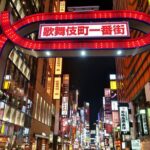
Shibuya feels different at night. This Shibuya night tour mixes authentic izakaya vibes with photo spots locals actually enjoy, then adds fun stops like purikura and an arcade. I like that you get a ready-made plan with a friendly local guide, plus 20+ edited professional-quality photos delivered within 48 hours. One thing to consider: you’ll be walking a fair bit in the dark and inside busy venues, so wear comfy shoes.
For Tokyo nightlife, the value is in the small details: a guided route that helps you avoid awkward guessing, and photo timing that makes Shibuya’s chaos look good instead of random. If you’re the type who wants more than a checklist of sights, this tour is built for you.
In This Review
- Key Things I’d Watch For Before You Go
- Why Shibuya Night Tours Work So Well
- Meeting Point: The Easiest Way to Start Without Stress
- 70-Year Yakitori Dinner at Toritake: The Real Izakaya Feeling
- What you should watch for
- Hachikō and Shibuya Crossing: Photo Stops That Aren’t Just Standing Still
- A realistic consideration
- Purikura Time at girls mignon: The Fun, Tokyo-Only Souvenir
- What to do to enjoy it more
- Adores Shibuya Arcade: Crane Games and Challenge Energy
- Convenience Store Sweets at the Finish: A Tokyo Nightcap
- Why this stop is worth it
- Photography During the Night: How You Get 20+ Edited Shots
- My practical advice
- How the Local Guide Customizes the Night Out
- Price and Value: Why $39 Doesn’t Feel Like a Generic Tour
- Who this is best for
- Who Should Book This Shibuya Night Tour
- Should You Book It? My Honest Recommendation
- FAQ
- FAQ
- How much does the Shibuya Night Tour cost, and how long is it?
- What’s included with dinner and drinks?
- Do I get photos, and when will I receive them?
- Where do we meet the guide?
- What stops are part of the tour?
- Is the tour flexible for different nightlife interests?
- What’s the cancellation policy?
- How big is the group, and can I bring a service animal?
Key Things I’d Watch For Before You Go
- Toritake-style yakitori dinner with grilled chicken over Binchotan charcoal for that classic izakaya hit
- 20+ edited pro photos within 48 hours, so you don’t have to wrestle with your phone at every stop
- Purikura photo booth time with stickers and effects for a playful, Tokyo-only souvenir
- Adores Shibuya game center where you can try crane games and arcade classics (and get friendly competition)
- Local guided routing at night that trades “tourist maze” wandering for efficient photo and food stops
- Two drink choices included with your meal, which makes the $39 price feel more realistic
Why Shibuya Night Tours Work So Well
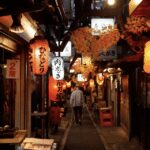
Daytime Shibuya is about crowds and shopping. Night Shibuya is about mood: neon, alley lights, and the rhythm of izakaya streets where people actually linger. That’s what makes a guided evening tour useful. You’re not just seeing landmarks—you’re learning how the area moves after dark.
I also like that this experience is designed for real fun, not just standing still for photos. You’ll have built-in entertainment stops (photo booths and an arcade), plus a dinner plan that’s meant to feel like a local night out.
The price matters here too. At $39 for roughly 3.5 hours, you’re not paying only for walking around. You’re paying for a local guide, a dinner dish, two drink orders, and a photography service that produces 20+ edited shots afterward.
You can also read our reviews of more evening experiences in Tokyo


Meeting Point: The Easiest Way to Start Without Stress
You’ll start at Daiso Shibuya Mark City Store, on the 1st floor of Shibuya Mark City (Dōgenzaka, 1-chōme). It’s convenient because it’s tied to a major retail landmark, and that matters in Shibuya where streets can be confusing after dark.
The tour ends back at the meeting point, which is a smart design. Tokyo evenings can make you lose track of where you are. This keeps your night tidy.
Also, the group size is capped at 7 travelers. That’s small enough for your guide to actually talk with you and help with photos, but big enough that the night doesn’t feel awkwardly “private.”
70-Year Yakitori Dinner at Toritake: The Real Izakaya Feeling
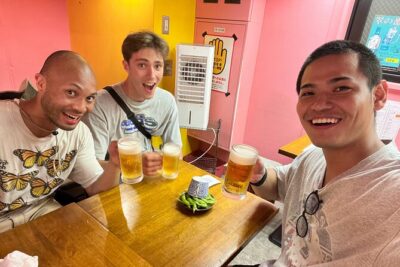
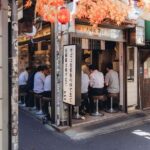
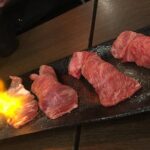
One of the biggest reasons to do this tour is the dinner stop. You’ll visit Toritake Souhonten, described as a long-established Shibuya yakitori spot loved for over 70 years. The key detail: yakitori is grilled over Binchotan charcoal, which is the kind of fuel that helps chicken stay juicy while getting a deep, smoky flavor.
I like dinners like this on guided tours because it solves a common Tokyo problem. Without local help, it’s easy to end up at a place that looks good but isn’t packed with regulars. The dinner here is meant to feel like a night out with locals, not a performance for tourists.
What you actually get is also clear: dinner is one dish from the izakaya menu. The chef recommends a set of five assorted grilled chicken skewers (yakitori)—so you’re not stuck with one sad skewer and a rice bowl and calling it a meal.
What you should watch for
You’ll have alcohol beverage options, with two drinks of your choice included. That’s generous for the price, but if you want to keep the night relaxed, order one drink early and save your second for later with dessert or after the game center.
Hachikō and Shibuya Crossing: Photo Stops That Aren’t Just Standing Still
After dinner energy, the tour shifts into iconic photo mode. You’ll start with Hachiko, the famous Shibuya statue. You’ll get a dedicated photo moment here, so you’re not trying to squeeze your shot while people stream past.
Then it’s on to Shibuya Scramble Crossing, the classic scramble where everyone crosses in multiple directions. Here’s the practical value: with a guide, you’re more likely to hit good angles and timing for photos. That matters because at the crossing, one wrong moment and your shot becomes a blur of random movement.
I’m also a fan of how the guide approach reduces phone stress. You’re getting photo help during the tour, and at a place like the crossing, that’s the difference between “I tried” and “this looks like a Tokyo scene from a movie.”
You can also read our reviews of more drinking tours in Tokyo


A realistic consideration
Crowds at Shibuya Crossing are part of the experience. Even with guidance, you should expect a busy, noisy atmosphere. If you hate crowds, you might want to plan extra patience and keep your expectations flexible.
Purikura Time at girls mignon: The Fun, Tokyo-Only Souvenir
Next up is purikura at girls mignon 渋谷店. Purikura are Japanese photo booths where you take pictures with your friends, then decorate them with stickers, drawings, and effects before printing or sharing digitally.
This stop is pure payoff if you like playful souvenirs. Instead of another generic photo, you end up with something that looks like it came from Japanese youth culture—colorful, edited, and a little chaotic in the best way.
It also pairs nicely with the rest of the night. After yakitori and landmark photos, purikura gives you a “break” where you’re not trying to look serious or pose perfectly.
What to do to enjoy it more
Go in ready to experiment. Purikura tools can be fast-moving, and you’ll get more fun results if you don’t overthink your expressions.
Adores Shibuya Arcade: Crane Games and Challenge Energy
After purikura, you’ll head to Adores Shibuya, a large game center in the heart of the area. Expect a mix of arcade games and crane-style games, and you’ll have time to try them while your guide helps you navigate what’s worth playing.
This is one of my favorite types of tour stops because it’s not passive. You actually do something with your hands—press buttons, chase prizes, and laugh when you miss.
The tour also sets you up for a friendly challenge. Some guests mention the guide played along, which makes the arcade feel like group fun rather than “you go do your thing while I watch.”
Convenience Store Sweets at the Finish: A Tokyo Nightcap
You’ll end at FamilyMart for sweets. This isn’t an afterthought; it’s a very Japanese way to close the night—something small, sweet, and easy to take in while you decompress.
Since the tour ends back at the meeting point, this final snack works like a gentle landing. You’re not rushing to find a place to sit or figure out what’s open. Your guide helps recommend options, which matters when convenience store choices can feel endless.
Why this stop is worth it
Convenience-store sweets in Japan are a whole category. Even if you’re only grabbing one item, it’s a low-pressure way to get a taste of everyday life—especially if your dinner was savory and you want something lighter to close.
Photography During the Night: How You Get 20+ Edited Shots
This is one of the most praised parts of the experience. You’ll get 20+ professional-quality photos from the tour, with edited delivery within 48 hours.
There are two kinds of photo help that matter:
- Timing and angles at key spots like Hachiko and the Scramble Crossing
- Actual shooting guidance so you’re not stuck fighting with your phone in a crowd
Some guests talk about how the guide’s photography skills produce results that look magazine-like. Others highlight that even at tricky street moments—like walking through alleyways and photo points—someone else is handling the camera work.
My practical advice
Bring a small bag and keep your hands free during photo stops. If you’re holding a phone, it’s harder to follow directions and harder to pose when your guide wants a quick shot.
If you plan to request specific styles (more neon shots, more candid street moments, more group photos), do that early. It’s easier for your guide to adjust the photo plan as the night moves.
How the Local Guide Customizes the Night Out
A big part of the value is not just where you go—it’s how your guide builds your night. The tour includes tailored activity suggestions based on what you like, and the overview suggests options such as karaoke, a game center, or a bar after the izakaya meal.
You might also see variation in what’s served depending on the guide’s recommendations. Some guests mention a guide named Riku helped teach Japan and also set an itinerary that fit their interests. Other guests describe getting taken to a restaurant where live music and song requests were part of the night, or having a chance to focus on sake and compare lots of varieties.
That flexibility is important. It means you’re not stuck with only one script. If you want food-first, you’ll likely get more time on the eating side. If you want a fun-night vibe, you’ll probably spend more time on arcade and nightlife options.
Price and Value: Why $39 Doesn’t Feel Like a Generic Tour
Let’s break down the value in plain terms.
For $39, you’re getting:
- A local guide
- Dinner: one dish (often the five yakitori skewer set)
- Two drink choices (alcohol included)
- Photography service with 20+ edited photos delivered within 48 hours
- Entry/ticket notes at stops listed as free for this experience design
- A planned route through several Shibuya night activities
If you tried to book these separately on your own, the photo component alone can be expensive. Add dinner and drinks, and suddenly the tour price looks like it’s doing the math for you: guide + meal + drinks + photos for one fixed amount.
Who this is best for
This works especially well if you:
- Want Tokyo nightlife without the guesswork
- Like food that feels local and casual
- Want photo results you’ll actually post
- Prefer a small group over big-bus touring
Who Should Book This Shibuya Night Tour
This is a strong fit for:
- Couples who want a fun night with good photo chances
- Friends who want playful stops like purikura and arcade games
- Solo travelers who want a guided social setup (max 7 helps)
- Anyone who likes izakaya culture and doesn’t want to spend hours deciding where to go
It may not be your best choice if:
- You hate crowds and noise (Shibuya Crossing is busy)
- You want a quiet, laid-back stroll with lots of downtime
- You don’t drink at all and also don’t care about the photo component
Should You Book It? My Honest Recommendation
If you want a Tokyo night that balances real eating, classic Shibuya landmarks, and fun photo-and-play stops, I’d book this. The standout reason is the combo: yakitori izakaya + a small-group local guide + 20+ edited photos you’ll get later, not just screenshots you lose in your camera roll.
The main reason to think twice is crowd tolerance. If you can handle busy streets and loud venues, this tour is one of the most practical ways to experience Shibuya after dark without making your night overly complicated.
FAQ
FAQ
How much does the Shibuya Night Tour cost, and how long is it?
The tour costs $39 and runs for about 3 hours 30 minutes.
What’s included with dinner and drinks?
Dinner includes one dish from the izakaya menu, with the chef recommending a set of five assorted yakitori skewers. Alcoholic beverages are also included, and you can order two drinks of your choice.
Do I get photos, and when will I receive them?
Yes. You get photography service during the tour, and you’ll receive 20+ edited professional-quality photos within 48 hours.
Where do we meet the guide?
You meet at Daiso Shibuya Mark City Store, on the 1st floor (Japan, 150-0043 Tokyo, Shibuya, Dōgenzaka, 1-chōme 12 渋谷マークシティ 1階).
What stops are part of the tour?
Stops include Toritake (yakitori/izakaya), Hachikō, Shibuya Scramble Crossing, girls mignon purikura at Shibuya, Adores Shibuya game center, and a FamilyMart sweet stop.
Is the tour flexible for different nightlife interests?
The tour includes tailored activity suggestions to match your preferences, and the overall night plan includes options such as karaoke, a game center, or a bar.
What’s the cancellation policy?
Free cancellation is available if you cancel at least 24 hours in advance for a full refund. If you cancel within 24 hours of the start time, the amount paid is not refunded.
How big is the group, and can I bring a service animal?
The tour has a maximum of 7 travelers. Service animals are allowed, and most travelers can participate.