REVIEW · TOKYO
IKEBANA experience
Book on Viator →Operated by Hiromi’s IKEBANA · Bookable on Viator
Ikebana in a real Tokyo home studio. I love Hiromi’s gentle English teaching and the step-by-step way you create your first arrangement from a textbook sample. One thing to consider: it depends on good weather and a minimum number of travelers, so plans can shift.
You also get something rare in Tokyo tours: time inside Japanese-style rooms in a private house, not a generic workshop space. After a demonstration, you’ll make your own living arrangement, get feedback, and take a photo of what you create.
If you’re curious, you can add basic tea ceremony steps (time permitting), and the lesson can end with matcha and Japanese sweets. It’s a calm, hands-on cultural break where you can ask questions about Japan as you go.
In This Review
- Key highlights you should care about
- Ikebana in Meguro: why this class feels more like culture than a craft demo
- Finding the start point at Toritsu-daigaku Station
- Inside the Japanese home studio: tatami rooms, garden feel, and the calm factor
- The lesson flow: sample first, then you create your arrangement
- What you learn in Ikebana: line, water, and why it stays beginner-friendly
- Optional tea ceremony basics: when it fits your interests
- Matcha and Japanese sweets after class: the best kind of winding down
- Price and value: what $115.31 buys you in a private Tokyo setting
- Logistics that matter on the day: timing, groups, and weather reality
- Who should book this Ikebana class, and who might prefer another style
- My quick decision guide: should you book Hiromi’s Ikebana class?
- FAQ
- Where is the meeting point for this Ikebana experience?
- How long does the class last?
- Is this a private tour or shared group activity?
- Is the class taught in English?
- Do I need any prior experience with Ikebana?
- What will I do during the lesson?
- Do I get matcha or Japanese sweets?
- Can tea ceremony be included in the experience?
- Are there opportunities to buy supplies for practicing at home?
- What if the experience is canceled due to weather or not enough travelers?
Key highlights you should care about
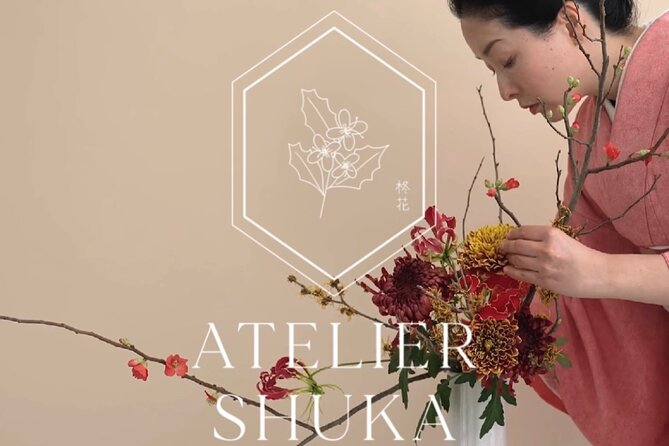
- Private class in a home studio: You learn in Japanese-style rooms inside Hiromi’s house.
- English instruction that stays practical: Clear explanations plus patient guidance.
- Build your arrangement in stages: A sample is made first, then you create your own using the textbook.
- Feedback and a take-home memory: Your work is reviewed, and you take a photo.
- Matcha and wagashi-style sweets included after: A proper, relaxing ending.
- Beginner-friendly structure: You focus on the line and water concept, so you typically don’t need many flowers.
Ikebana in Meguro: why this class feels more like culture than a craft demo
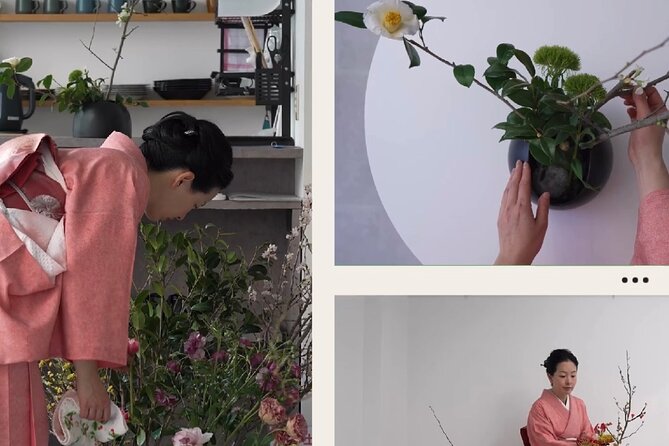
This Ikebana experience is built for people who want the real atmosphere of Japan, not just a quick souvenir activity. The setting matters. You’re taught in Japanese-style rooms inside a private home, so the whole lesson feels grounded in daily life, not staged for tourists.
I also like the teaching style. Hiromi’s approach is careful and gentle, and she teaches in English. That combination means you’re free to ask questions without feeling lost the moment you step in.
Price-wise, $115.31 for about 1 hour 30 minutes is not “cheap,” but it is fair for what you get: private instruction in a home environment, guidance as you create, and matcha with sweets afterward. If you’ve been spending your Tokyo days doing big-ticket sights, this is the kind of stop that gives you a different rhythm.
You can also read our reviews of more tours and experiences in Tokyo.



Finding the start point at Toritsu-daigaku Station
The experience starts and ends back at the meeting point near public transportation: Toritsu-daigaku Station, 1-chōme-5-1 Nakane, Meguro City, Tokyo 152-0031. Since it returns to the same place, you don’t have to solve the “where do I go afterward” puzzle.
In practice, you’re meeting before heading to the lesson location. One review notes Hiromi met guests at the station and even helped with an umbrella when needed, which tells you the vibe here is practical and considerate rather than rigid.
Because it’s a private tour/activity, it’s just your group. That matters in a lesson like Ikebana, where you want your questions answered and your arrangement corrected without waiting your turn.
Inside the Japanese home studio: tatami rooms, garden feel, and the calm factor
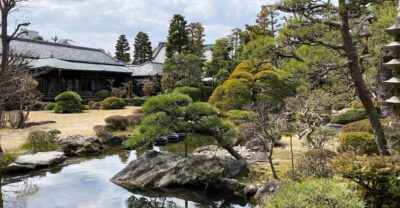
The lesson happens in Japanese-style rooms inside Japanese houses, including tatami spaces. Several reviews highlight the quiet, cozy feeling of the room, which is exactly what you want if you’re traveling and slightly overwhelmed by crowds.
You’ll also notice the space is personal. Reviews describe a home studio and even a colorful garden as part of the atmosphere. That doesn’t just add beauty. It helps you slow down and focus on what Ikebana actually is: shaping line, space, and balance through living materials.
If you’re the kind of traveler who likes your experiences to feel local, this is a strong fit. If you’re expecting a bustling studio with lots of other students, you might find the pace more intimate than you’re used to.
The lesson flow: sample first, then you create your arrangement
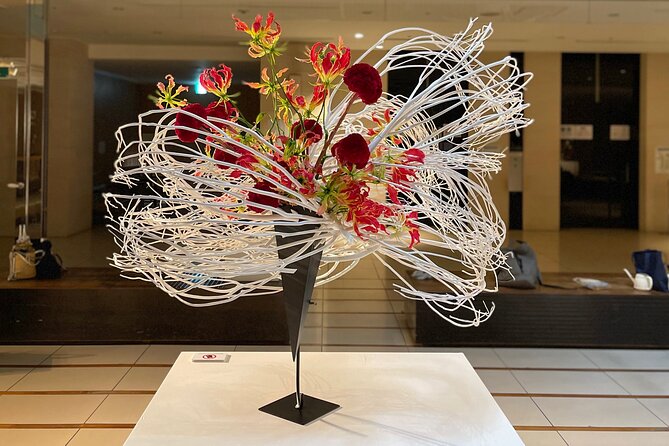
The structure is straightforward, and that’s why it works for beginners.
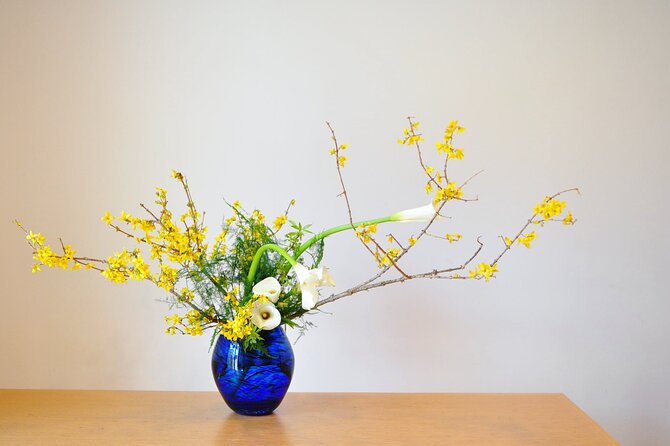
First, the instructor creates a sample while looking at the textbook. You’re not thrown into the deep end. You see the steps, and you understand what the instructor is aiming for.
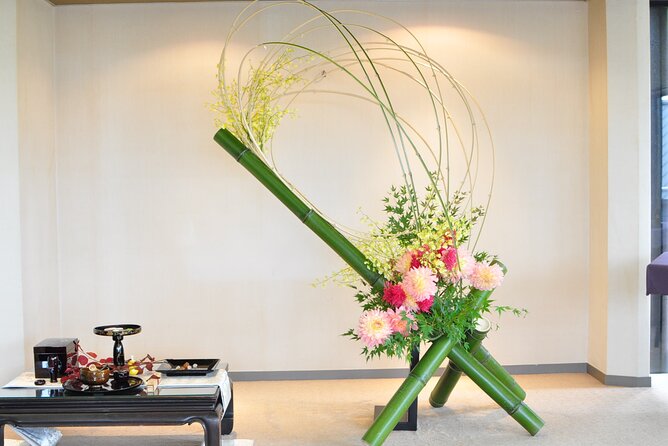
Then it’s your turn. Each person creates a living arrangement on their own, with Hiromi watching. She comments and revises your work, and she’ll help correct things so your arrangement looks intentional, not accidental.
You’ll also handle the practical side. Reviews mention learning how to properly cut flowers and arrange them. That’s a key skill, because Ikebana isn’t just about placing stems. It’s about creating a composition with proportion and direction.
Finally, you take a photo after the arrangement work is reviewed. That means you leave with something more meaningful than a generic group shot. You can actually remember what you made, step by step.
What you learn in Ikebana: line, water, and why it stays beginner-friendly
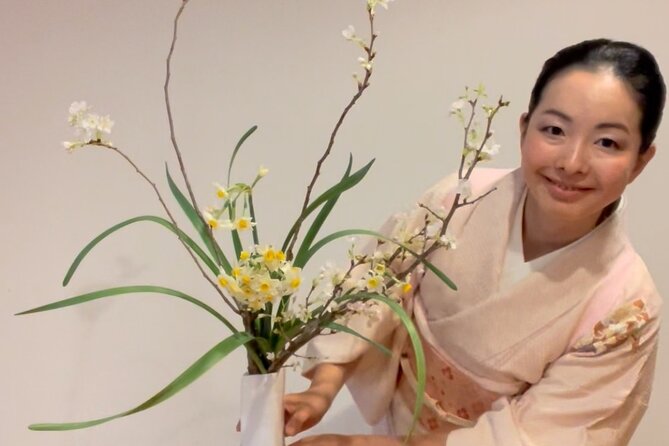
Ikebana gets discussed like it’s mysterious. In reality, the fundamentals are learnable fast, especially in a class designed for first-timers.
From the way this lesson is described, you learn the foundations, including how Ikebana focuses on the beauty of flower line and water. That focus changes the whole experience. You don’t rely on using a ton of flowers to make something impressive. One review notes you typically won’t use many flowers, which makes it easier to finish within the 1 hour 30 minutes.
You also get history and context as part of the teaching. Several reviews mention Hiromi guiding students through the background of Ikebana, not just the hands-on motions. That’s important. When you understand the “why,” your arrangement starts to make sense even if you’ve never touched a textbook before.






Optional tea ceremony basics: when it fits your interests
This experience can include basic tea ceremony instruction if you’re interested. The description says you can learn how to make basic tea ceremony, and at least one review mentions learning basic tea ceremony information.
Here’s how to approach it when you book: decide in advance whether you want that add-on. If tea is your thing, ask early so the timing works for you. If your priority is only Ikebana, you can keep it focused and treat tea as a bonus.
Even if tea isn’t a main goal, you’ll still benefit from the cultural side of the lesson. In Japanese culture classes, the tea element often reinforces patience and attention, which matches the Ikebana mindset.
Matcha and Japanese sweets after class: the best kind of winding down
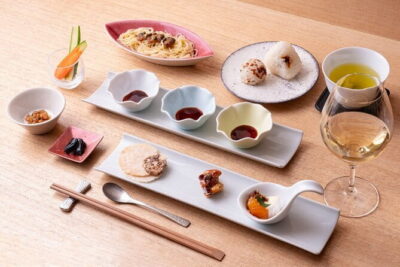
The session doesn’t just end when the flowers are arranged. If you have time after the lesson, you’ll be offered Japanese sweets and matcha.
Multiple reviews call out matcha and sweets as a highlight, including comments about tasting delicious treats in a tatami room. This part may sound secondary, but it’s often what turns a workshop into a full experience. You get a quiet landing period, with something warm and comforting, after using your hands and concentrating.
If you like your Tokyo evenings calm rather than rushed, this is a nice fit. It also gives you a moment to ask extra Japan questions while you’re not actively working on stems.
Price and value: what $115.31 buys you in a private Tokyo setting
At $115.31 per person, you’re paying for more than “materials and a quick demo.” You’re paying for:
- Private instruction with only your group
- A structured lesson (sample first, then you create)
- Instructor feedback and revisions
- A photo of your finished arrangement
- Time in a Japanese home studio, including Japanese-style rooms
- Matcha and sweets after the lesson
That’s why the value feels reasonable, even if it’s not the cheapest activity on your list. Many Tokyo experiences cost less but deliver a crowded, impersonal vibe. Here, you’re in a home setting with a specific instructor, and you leave with something you made yourself.
Booking interest also suggests demand: the class is often booked about 28 days in advance on average. If your trip dates are fixed, plan ahead so you’re not trying to scramble for a last-minute slot.
Logistics that matter on the day: timing, groups, and weather reality
The class runs about 1 hour 30 minutes. That’s long enough to learn steps and adjust your arrangement, but short enough to fit into a Tokyo day without wiping out your schedule.
It’s also private for your group, which helps with comfort and questions. Most travelers can participate, and reviews include a wide range of family setups, including kids and multiple generations.
Two practical considerations:
- The experience requires good weather. If it’s canceled due to poor weather, you’ll be offered another date or a full refund.
- There’s a minimum number of travelers. If the minimum isn’t met, you may be offered a different date/experience or a full refund.
That weather point matters because it can turn your “book it and forget it” plan into a “check the forecast” plan, which is normal for outdoor-influenced activities.
Who should book this Ikebana class, and who might prefer another style
You’ll likely love this experience if you:
- Want a beginner-friendly introduction to Ikebana
- Prefer English guidance instead of struggling through gestures
- Like learning in an intimate home environment
- Want a cultural break with matcha and sweets afterward
- Are traveling with family members of different ages, since reviews mention kids and grandparents enjoying it
You might think twice if you:
- Want a large public studio with lots of other participants
- Need a highly predictable schedule regardless of weather
- Prefer lessons focused only on theory or only on performance-style demonstrations
If you’re somewhere in the middle, this class is a good compromise. You get structure, but you also get room for personal expression while still staying guided.
My quick decision guide: should you book Hiromi’s Ikebana class?
Book it if you want a Tokyo experience that feels personal, calm, and genuinely hands-on. The combination of Hiromi’s clear English teaching, the step-by-step sample-to-your-arrangement flow, and the end-of-class matcha and sweets makes it a strong use of your time.
Skip it if your main goal is seeing Tokyo’s big sights in one go and you feel annoyed by activities that require flexible timing due to weather or minimum guest counts.
If you’re a beginner, this is one of the easiest cultural art forms to jump into because you’re not required to already know what you’re doing. You just show up curious, follow the sample, and create something you can be proud of.
FAQ
Where is the meeting point for this Ikebana experience?
It starts at Toritsu-daigaku Station, 1-chōme-5-1 Nakane, Meguro City, Tokyo 152-0031, Japan, and ends back at the same meeting point.
How long does the class last?
The duration is approximately 1 hour 30 minutes.
Is this a private tour or shared group activity?
This is a private tour/activity, so only your group participates.
Is the class taught in English?
Yes. You’ll be taught carefully and gently in English.
Do I need any prior experience with Ikebana?
Most travelers can participate, and the class is designed to teach from basics, with guidance based on a textbook.
What will I do during the lesson?
The instructor makes a sample while looking at the textbook, and then you create an arrangement yourself. Hiromi comments or revises your work, and you take a photo.
Do I get matcha or Japanese sweets?
If you have time after the lesson, Japanese sweets and matcha are prepared and offered.
Can tea ceremony be included in the experience?
Yes. If you’re interested in tea ceremony, the class can teach you basic tea ceremony.
Are there opportunities to buy supplies for practicing at home?
One review notes that you can purchase supplies so you can continue making Ikebana when you get home.
What if the experience is canceled due to weather or not enough travelers?
The experience requires good weather, and it also has a minimum number of travelers. If canceled due to poor weather or not meeting the minimum, you’ll be offered a different date or a full refund.